


Aliko Dangote is structuring a dedicated investment vehicle in Kenya that will give investors direct access to the Dangote Group before the planned pan-African initial public offering of his petroleum refinery.
All returns will be paid in US dollars. The World Bank Group has committed to supporting what Dangote describes as the continent’s largest industrial ownership programme.
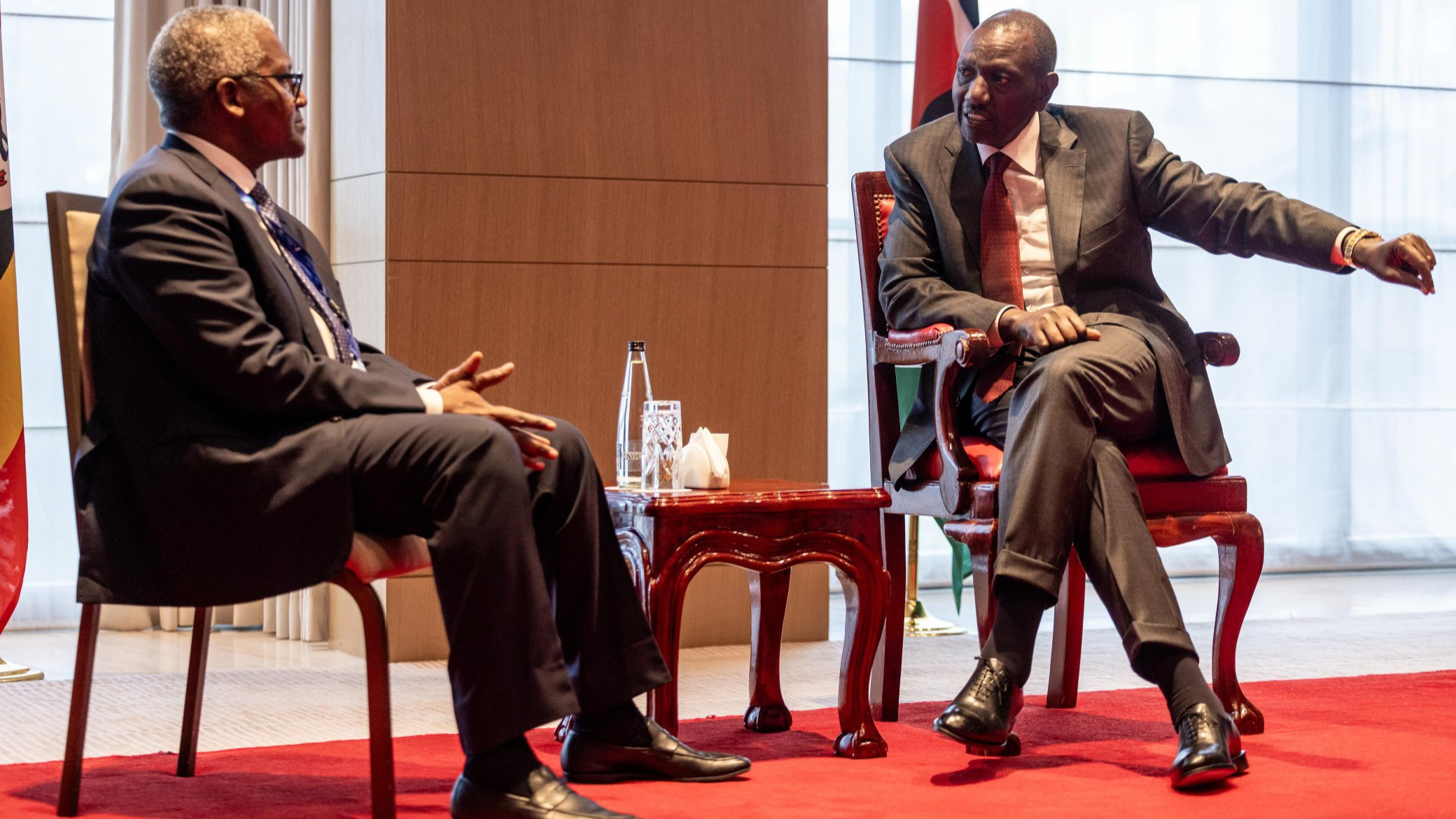
Dangote disclosed the Kenya structure during a conversation with IFC President Makhtar Diop, identifying the country as a specific investor entry point separate from the secondary NSE listing first reported by Bloomberg in April. The vehicle forms part of a broader ownership restructuring at Dangote Industries, the parent group, which has never paid an external dividend.
“In Kenya, we put up a vehicle, and all investment will be done there. When they want to sell down, they can always sell down because there is a certificate. You can take your capital out at any time,” Dangote said.
Diop confirmed the institutional backing. “Industrialisation of Africa will require people to take risks and invest in it. If institutions like ours are not here to support that, it will not happen. You have the full commitment of the World Bank Group,” he told Dangote.
A refinery its critics said would never exist
The refinery reached full capacity of 650,000 barrels per day in February 2026 after costing US$20 billion (KSh 2.59 trillion) to build, a project that trading companies and major corporations had publicly written off as unbuildable. IFC was part of the original financing pool, providing US$478 million (KSh 61.94 billion) in 2005 through a seven-year loan that Dangote repaid in 18 months.
Dangote underscored just how deliberately he has withheld personal financial gain. “The parent company, Dangote Industries, has never given a dividend. I have never taken one dime out of the company since we started. Everything has been reinvested back into the business,” he said.
The group now tracks toward US$100 billion in annual revenue, with EBITDA projected between US$30 billion and US$35 billion across all operations and dividends expected to reach between US$20 billion and US$25 billion annually once the business reaches scale.
“All our dividends will be in dollars. You can choose whether you want naira, dollars, or South African rand. Whatever you need, we’ll pay. But it will be calculated and paid in dollars,” he said.
IPO structure and timeline
The refinery IPO, first reported by Bloomberg, targets a raise of up to US$5 billion (KSh 647.40 billion) through an initial offer of 5% to 10% of Dangote Petroleum Refinery and Petrochemicals FZE. Analysts value the refinery at between US$40 billion (KSh 5.18 trillion) and US$50 billion (KSh 6.47 trillion).
The primary listing targets the Nigerian Exchange Group main board between June and July 2026. The NSE is among six African bourses involved, confirmed NSE Chief Executive Frank Mwiti. The precise structure of the Kenya vehicle — whether a listed entity, a depositary receipt programme, or a special purpose vehicle — has not been disclosed.

Dangote targets 20,000MW power project as industrial expansion accelerates
Beyond oil, Dangote is moving into electricity generation at a scale that would transform Nigeria’s power sector. He confirmed a 20,000MW power project during the same interview with Diop, framing it as the next phase of an industrial build-out that spans refining, fertilisers, ports, and mining.
“We are now going into power — 20,000 megawatts,” he said.
To put that figure in context: Nigeria currently carries an installed generation capacity of roughly 13,000MW, much of it unavailable due to chronic infrastructure failures. A 20,000MW addition would more than double the country’s theoretical capacity and fundamentally reshape energy supply across the region. Dangote provided no financing details or timeline.
A continental industrial programme, not a single project
Dangote framed the expansion as something larger than any individual asset. “The needs of Africa are petroleum products, fertilisers,” he said. “In about two and a half years, we will be the largest fertiliser company in the world. We are putting up 12 million tons of urea. We are opening up mines of potash and phosphate in Congo and Brazil. We are building the biggest deep-sea port with an 18-metre draft. We are doing LNG.”
Stronger cash flow is enabling the pace. “We are now actually free of assets, and we can raise more money. Our cash flow now is very, very strong,” he said.
The refinery, already operating at 650,000 barrels per day, is being scaled toward 1.4 million barrels per day — a target that would make it the largest crude oil processing facility in the world. It has already improved Nigeria’s domestic fuel supply and supported regional availability during recent disruptions tied to Middle East tensions.
Dangote closed with the argument that underpins all of it. “We will open Africa by demonstrating that we believe in Africa, by investing our money in Africa. Because if I don’t invest my own money, I can never go to any conference and convince people that Africa is a good place to come and invest. But right now, I have a voice. I have demonstrated that these things are possible.”
