



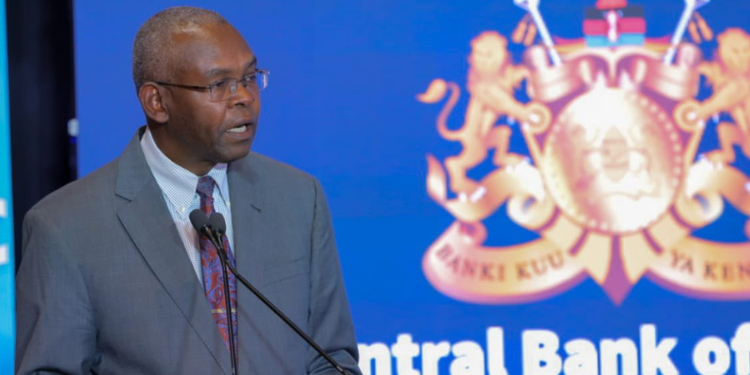
Kenya’s Monetary Policy Committee (MPC) kept the Central Bank Rate (CBR) unchanged at 8.75% on April 8, 2026, pausing the longest easing cycle in the Central Bank of Kenya’s history.
CBK Governor Dr. Kamau Thugge announced the decision after ten consecutive rate cuts dating back to June 2024, a cumulative reduction of 425 basis points from a cycle high of 13.0%. The committee said it wants to monitor potential second-round inflation effects from rising energy prices before easing further.
Banks Called It Before the Meeting
The hold was widely expected. Both the Kenya Bankers Association (KBA) and NCBA’s research desk had publicly recommended keeping rates steady, citing a common set of risks.
The KBA warned that premature adjustment could destabilise an economy navigating fragile external conditions, pointing to exchange rate pressures from a widening current account deficit and potential disruptions to diaspora remittances.
NCBA’s pre-MPC note went further, forecasting not only a rate hold but also a cash reserve ratio increase to manage elevated liquidity. The bank flagged Brent crude at USD 109 per barrel, up over 80% since the Middle East conflict began on February 28, 2026 and projected inflation climbing to 5–6% by May and June. It also noted sharp rises in global agricultural commodity prices: urea fertiliser up 48%, palm oil up 13%, and sugar up 7%.
The Middle East Factor
The MPC pointed directly to the escalating Middle East conflict as the primary driver of its decision. International oil prices surged from USD 63 per barrel in December 2025 to nearly USD 98 by late March 2026, which the committee flagged as a material risk to both inflation and growth.
Global growth, previously forecast at 3.3% for 2026, now faces downward pressure. The Russia-Ukraine conflict and rising trade policy tensions add further uncertainty. Major central banks have similarly kept rates on hold as they assess how the conflict reshapes their own economic trajectories.
Domestic Inflation: Within Target, But Climbing
Kenya’s headline inflation edged up to 4.4% in March 2026 from 4.3% in February, still below the 5% target midpoint. Core inflation held steady at 2.1%, helped by softer prices for sugar and maize flour.
Non-core inflation told a different story, rising to 10.8% from 10.1%, driven by sharply higher prices for tomatoes and Irish potatoes. The MPC projects overall inflation will stay within target in the near term, supported by favourable weather, a stable exchange rate, and current monetary policy. But NCBA warned that oil price pass-through to domestic pump prices is still working its way through, and any government fuel subsidy is likely to be partial and short-lived.
Current Account Deficit Widens
The current account deficit widened to an estimated 2.4% of GDP in the twelve months to February 2026, up from 1.3% in the same period in 2025. Higher oil import costs were the main driver.
Goods exports grew 8.1%, led by horticulture, tea, coffee, and machinery. But goods imports rose 10.4%, and diaspora remittances grew only 1.9%. The MPC revised its 2026 current account deficit projection to 3.0% of GDP, up from an earlier estimate of 2.2%.
Foreign exchange reserves stood at USD 13.4 billion, equivalent to 5.68 months of import cover. The shilling has weakened slightly to around 130 against the dollar amid trade deficit pressures.
Credit Growth Picking Up
Despite the external headwinds, domestic conditions remain broadly supportive. Private sector credit growth accelerated to 8.1% in March 2026 — the strongest in over two years — up from 7.4% in February and a contraction of 2.9% as recently as January 2025.
Average commercial bank lending rates fell to 14.7% in March, down from 17.2% in November 2024, reflecting the cumulative impact of the easing cycle. The MPC noted that its revised Risk-Based Credit Pricing Model, fully implemented in March 2026, should improve how policy decisions feed through to actual lending rates.
The KBA cautioned that high non-performing loans are still slowing transmission of cheaper credit to businesses and households. Building and construction, trade, agriculture, and consumer durables all recorded strong credit growth.
Growth Forecast Trimmed
Kenya’s economy grew an estimated 5.0% in 2025, up from 4.7% in 2024. The MPC revised its 2026 growth forecast down to 5.3% from 5.5%, citing energy cost pressures and weaker demand. NCBA had expected the cut to go deeper, to around 5.0%.
Business confidence surveys from March 2026 showed sustained optimism, anchored by low inflation, stable exchange rates, and infrastructure spending, though respondents flagged global uncertainty and weak consumer demand as key concerns.
What’s Next
The MPC meets again in June 2026. By then, the trajectory of the Middle East conflict and its impact on energy and food costs will likely determine whether the committee cuts, holds, or tightens.
The banking sector enters this period in relatively good shape, liquidity and capital ratios remain robust, and gross non-performing loans have fallen to 15.6% of total loans from a peak of 17.6% in August 2025.
