


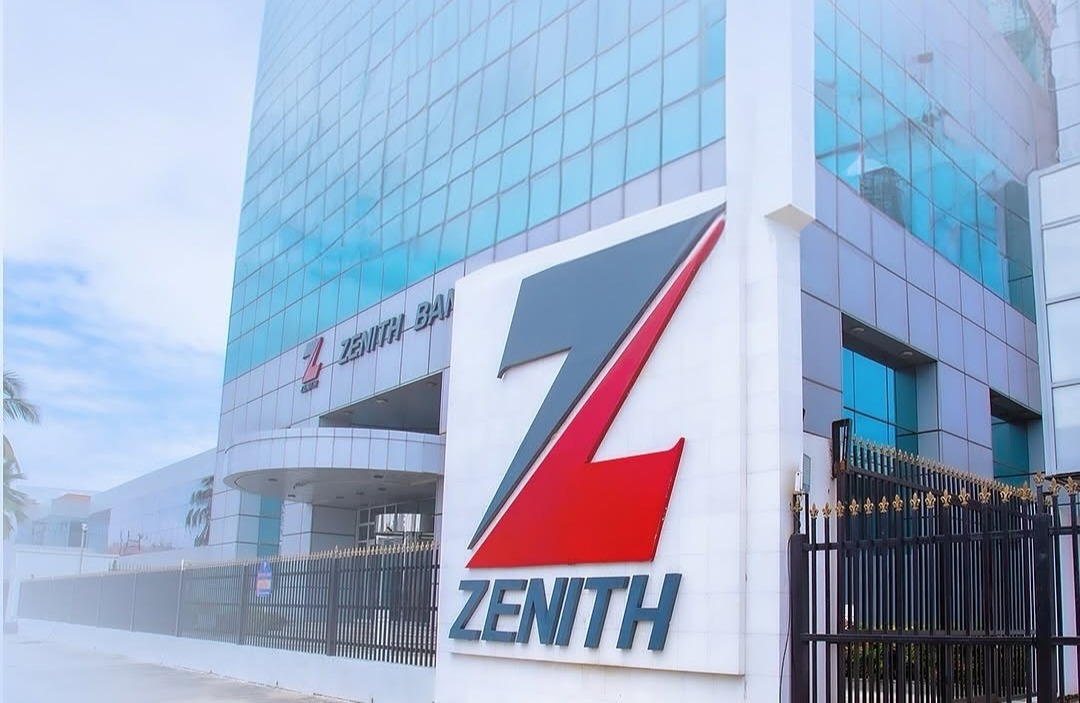
Zenith Bank Plc has completed its acquisition of Paramount Bank Kenya Limited, securing regulatory clearance from authorities in both Kenya and Nigeria.
The Central Bank of Kenya confirmed the transaction on April 8, formalising what it described as a deal that would “ensure continued stability, enhance the resilience of the Kenyan banking sector and promote competition.” CBK approved the acquisition on March 9, 2026, under Section 13(4) of the Banking Act, followed by Cabinet Secretary approval from the National Treasury and Economic Planning on March 16, 2026, under Section 9 of the Banking Act.
The deal gives Zenith Bank 100 percent of Paramount Bank’s shareholding and marks the Nigerian lender’s formal entry into the East African market. Zenith joins Access Bank, United Bank for Africa, and Guaranty Trust Bank as the fourth Nigerian commercial bank to establish a presence in Kenya.
A Bank Built Over Three Decades
Paramount Bank traces its roots to 1993, when it launched as a non-banking financial institution under the name Combined Finance Limited. It obtained a commercial banking licence in 1995 before merging with Universal Bank in 2000 to form Paramount Universal Bank. In 2015, the bank reverted to its current name.
The CBK notes that Paramount Bank carries one subsidiary, Paramount Bancassurance Intermediary Limited, which distributes insurance products. The bank operates from its headquarters at Sound Plaza in Westlands, with seven branches, four in Nairobi and one each in Mombasa, Kisumu, and Eldoret. The existing article had cited nine branches; the CBK statement puts the figure at seven.

Steady Earnings, a Rising Bad Loan Problem
In the nine months to September 2025, Paramount Bank recorded profit after tax of Ksh 234.8 million, a 0.7% rise from Ksh 233.2 million a year earlier. Net interest income slipped 5% to Ksh 474.9 million, while non-funded income surged 93.1% to Ksh 280 million.
Customer deposits grew 5% to Ksh 12.9 billion. Loans and advances expanded 4.4% to Ksh 8.6 billion, holding the loan-to-deposit ratio steady at 66.6%. Against that backdrop, asset quality deteriorated sharply: gross non-performing loans climbed 48.3% to Ksh 2.2 billion, a book Zenith Bank now inherits and must address.
Capital Threshold Met Early
Paramount Bank entered the acquisition having already satisfied the CBK’s minimum core capital requirement of Ksh 3 billion ahead of the 2025 deadline. A rights issue completed during the period raised Ksh 332 million from existing shareholders, lifting core capital to Ksh 3.12 billion.
The capital challenge does not stop there. CBK requires commercial banks to reach a higher threshold of Ksh 5 billion by end of 2026. Zenith Bank will need to inject fresh capital into its Kenyan subsidiary to meet that deadline within two years of completing the acquisition.
Zenith Bank’s Own Numbers: Growth With a Caveat
Zenith Bank posted gross earnings of N4.19 trillion for the 2025 financial year, up 5.6% from N3.97 trillion in 2024. A 35% jump in interest income to N3.67 trillion drove net interest income 52.7% higher to N2.64 trillion, with the net interest margin widening to 13% from 10%.
Non-interest income told a different story. Trading and foreign exchange gains swung to a loss of N63.1 billion from a gain of N1.1 trillion the prior year, capping overall operating income growth at 7.6% at N3.04 trillion. Net income edged up less than 1% to N1.04 trillion.
The balance sheet held firm. Total assets rose 5% to N31.46 trillion, while shareholders’ equity climbed 22.2% to N4.92 trillion. The bank is headquartered in Lagos, listed on both the Nigerian Stock Exchange and the London Stock Exchange, and operates more than 450 branches across Nigeria, with additional presence in West Africa, the United Kingdom, France, and the United Arab Emirates.
Valuation and Dividends
Despite muted profit growth, Cowry Asset Management notes that Zenith Bank’s valuation remains undemanding, trading at a price-to-earnings ratio of 2.44x and a price-to-book ratio of 0.52x, with an earnings yield of 41% and a dividend yield of 8.5%. The board declared a final dividend of N8.76 per share for 2025, bringing the full-year payout to N10.00 per share more than double the N4.00 paid in 2024.
The Kenya acquisition and a strong capital base position Zenith Bank to pursue its continental ambitions. But the real test lies immediately ahead: resolving Paramount Bank’s deteriorating loan book and meeting Kenya’s rising capital bar before the 2026 deadline.
