



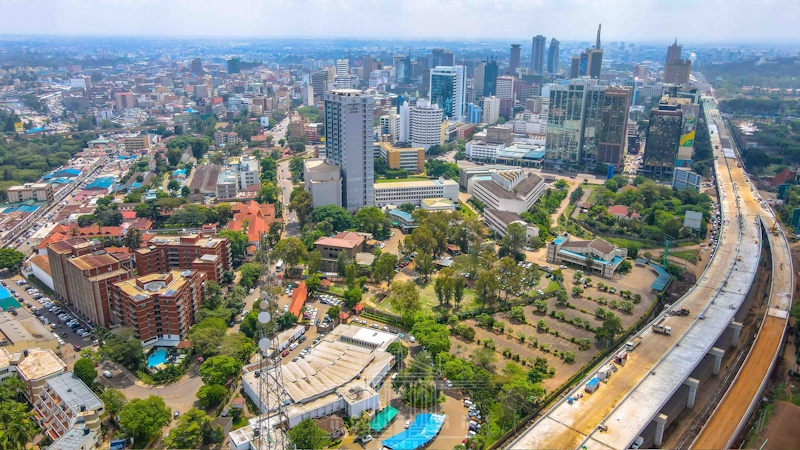
Nairobi will host the Green Climate Fund’s regional office for East and Southern Africa. The GCF Board made the decision at its 44th meeting in Songdo, South Korea, which ran from 25 to 28 March 2026.
The selection ends a competitive global process that drew proposals from 43 countries. Seventeen of those came from Africa alone. The Board also approved a second African office in Abidjan, Côte d’Ivoire, to serve Central, North and West Africa, alongside new offices in Panama City for Latin America and the Caribbean, and Amman, Jordan, for Eastern Europe, Central Asia and the Middle East.
For the first time in its history, the world’s largest dedicated climate fund will operate from within the developing countries it funds.
What the Nairobi Office Will Do
The office serves East and Southern Africa, a region that carries a disproportionate share of climate risk. Prolonged drought, flooding and rising sea levels threaten communities across the sub-region, yet access to climate finance has historically been slow, complicated and concentrated among a small number of well-resourced institutions.
The Nairobi office changes that equation. It will provide technical assistance to national governments, support the accreditation of local implementing organisations, accelerate project development and strengthen accountability for funded work. For civil society groups and community organisations working on the ground, a regional office removes layers of distance that have long made GCF funding difficult to reach.

A City Built for Multilateral Work
Nairobi already anchors Africa’s multilateral ecosystem. The city hosts the United Nations Environment Programme headquarters, the UN Office at Nairobi and more than 150 international and intergovernmental organisations. The GCF office joins that network, with around 26 staff expected across the two African locations.
Kenya’s State Department for Environment and Climate Change welcomed the outcome, describing the selection as recognition of the country’s standing in environmental governance and climate diplomacy.
GCF Executive Director Mafalda Duarte said the decision marked a turning point. “The selection of host cities for our regional offices will bring us closer to the countries that we serve, increasing impact and engagement. I would like to thank all 43 countries who expressed an interest in hosting a GCF office.”
Operations could begin as early as 2027, subject to the finalisation of host country agreements covering staff privileges and immunities.
Nearly USD 1 Billion Approved for Climate Action
The regional office announcement came alongside a substantial funding decision. The Board approved USD 960.3 million in new climate finance across 18 projects, pushing GCF’s total portfolio past USD 20 billion across 354 projects and programmes.
Africa received the largest share. Seven projects directed approximately USD 441 million to the continent — 46% of all new funding approved at the meeting. The single largest allocation was a USD 250 million programme, backed by the World Bank, to expand resilient energy access across 21 countries in Eastern and Southern Africa.
The Board also approved the first single-country GCF investments in Chad, Jamaica and The Bahamas, alongside the accreditation of 10 new partner organisations, six of them direct access entities from Barbados, Bhutan, Kyrgyzstan, Nigeria, the Republic of Korea and the State of Palestine.
Co-Chair Amb. Seyni Nafo of Mali put it directly: “We are reaching communities that need climate finance the most.”
What This Signals for Africa
A regional office and nearly half a billion dollars in new African project approvals arriving at the same meeting point in the same direction. The GCF is deepening its commitment to Africa at both the institutional and programming levels, at a moment when global climate finance flows remain far below what the continent needs.
Co-Chair Leif Holmberg of Sweden noted that six projects cleared a new streamlined assessment process, evidence that internal reforms are producing faster pathways to funding. “Seven project agreements were signed immediately after the Board meeting,” he added, “ensuring that these investments reach communities without delay.”
The Nairobi office does not solve the climate finance gap on its own. But it removes one of the most persistent obstacles: proximity. Governments, local implementers and communities across East and Southern Africa will now have a direct line to the institution that holds the resources they need.
