



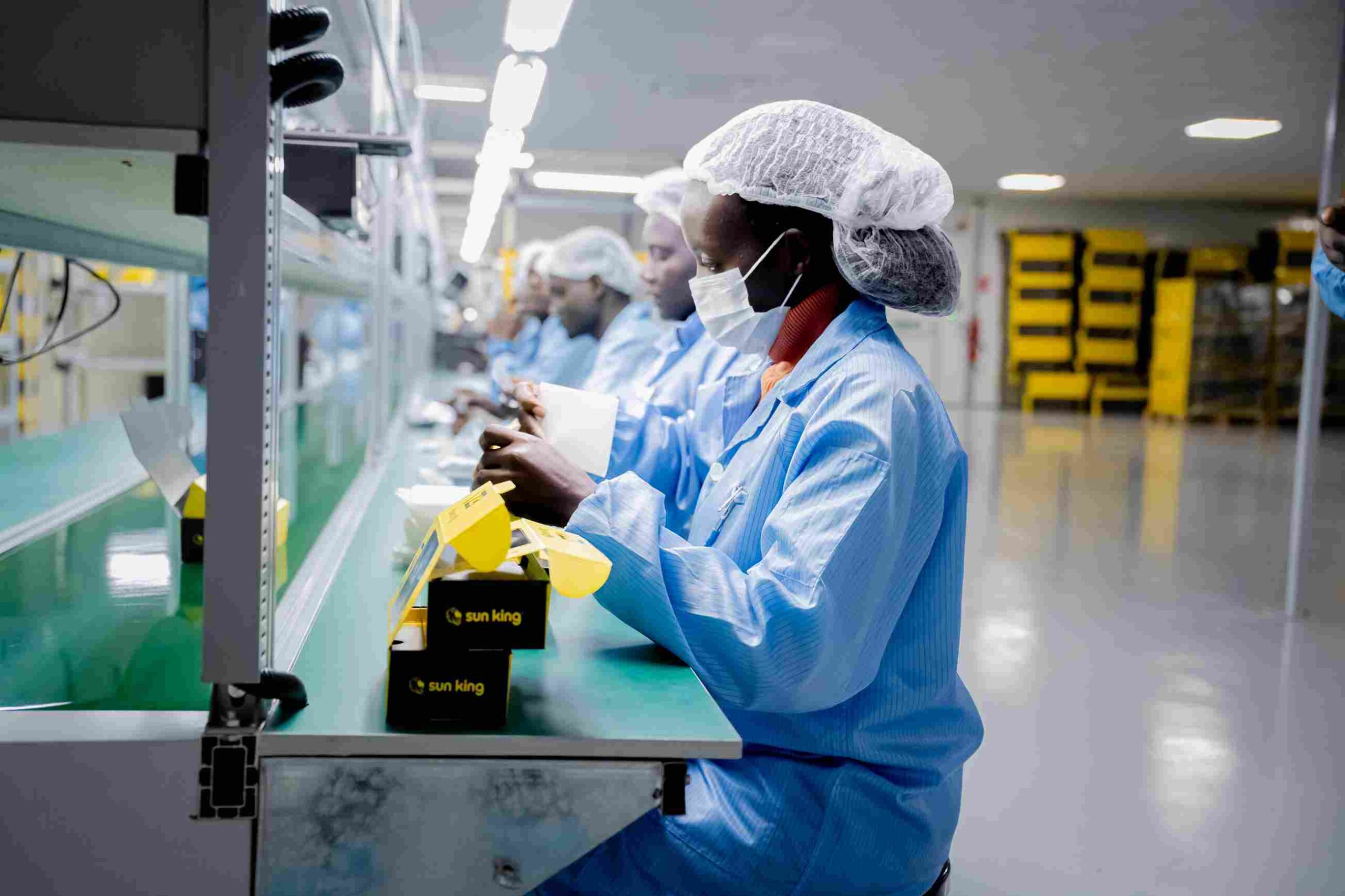
Kenya’s manufacturing sector has issued a strong call for coordinated government support to unlock industrial growth, strengthen competitiveness, and expand intra‑African trade.
This was during the launch of the Manufacturing Priority Agenda (MPA) 2026 by the Kenya Association of Manufacturers (KAM).
The MPA comes at a critical time. Manufacturing contributes 7.3% to Kenya’s GDP, despite its central role in job creation, government revenue, innovation, exports, and linkages across agriculture, services, and logistics. While the economy remains stable, high production costs, regulatory burdens, delayed VAT refunds, and limited regional trade integration continue to constrain industrial expansion.

Speaking at the launch, Principal Secretary for MSMEs Development, Susan Mangeni, reaffirmed government commitment: “With the right support, our local industries remain the cornerstone of job creation and sustainable growth. We must commit ourselves to building, creating, and adding value locally and to proudly consuming and promoting products made right here in Kenya.”
She emphasised that manufacturing is central to the Bottom‑Up Economic Transformation Agenda (BETA), which aims to raise manufacturing’s GDP contribution to over 20% by 2030, increase exports to 30%, and attract up to USD 10 billion in foreign direct investment through value addition, SME empowerment, and industrial parks.
Sector Performance: Uneven Growth
Kenya’s manufacturing sector has experienced uneven growth over time. The highest growth rate was recorded in Q2 2021 at 11.3%, driven by a surge in non‑food production (12.2%), motor vehicle assembly (10%), galvanized iron sheets (34.5%), and paper products (13.5%). The food sub‑sector also expanded by 6.7%, led by dairy, bakery, and tobacco products.
By Q3 2025, real GDP growth in manufacturing stood at 2.5%, slightly higher than 2.3% in the same quarter of 2024. Growth was driven by cement production (up 15.7%), galvanised sheets (20.3%), and modest gains in motor vehicle assembly, while the food sub‑sector declined.
GDP Contribution and Global Comparisons
Manufacturing’s share of GDP has steadily declined—from 11.08% in 2011 to 7.3% in 2024. Kenya hopes to reverse this trend through the Manufacturing 20BY30 Vision, which targets a 20% contribution by 2030.
Comparisons highlight the challenge. While Kenya, South Africa, and Egypt have stagnated or declined, Vietnam’s manufacturing GDP has surged. In 2024, Vietnam’s manufacturing value added was USD 109.9 billion, with a projected CAGR of 8.78% (2024–2028).
According to McKinsey, Vietnam’s success stems from foreign direct investment in labor‑intensive industries, supportive infrastructure, strategic location, and government incentives such as tax breaks and specialised industrial zones.
Output, Employment, and Taxes
- Output: Manufacturing output rose to KES 3.69 trillion in 2024, up from KES 3.51 trillion in 2023. Value added increased to KES 1.18 trillion, while employee compensation grew 9.3% to KES 309.7 billion.
- Employment: Formal manufacturing jobs grew 1.99% to 369,200 in 2024, accounting for 11.5% of total formal employment. Achieving the 20% GDP target by 2030 could generate at least one million jobs.
- Taxes: Between January 2023 and January 2024, manufacturers contributed KES 230 billion in customs taxes and KES 135.2 billion in domestic taxes, totaling KES 365 billion.
AGOA Extension Brings Relief but Signals Tougher Trade Terms Ahead
Exports and Regional Trade
Kenya’s manufactured exports account for 30.7% of total merchandise exports, lagging behind South Africa (40.5%), Egypt (52.2%), Vietnam (85.8%), and South Korea (87.9%). In 2024, Kenya exported goods worth KES 1.1 trillion, with 38.3% destined for African markets.
KAM Board Vice Chair Hitesh Mediratta emphasised: “By fully leveraging frameworks such as the AfCFTA and EAC, addressing non‑tariff barriers, and lowering the cost of production, we can expand intra‑African trade, achieve economies of scale, and position Kenya as a regional manufacturing hub.”
The Ten Agendas of MPA 2026
The Manufacturing Priority Agenda 2026 provides a practical roadmap anchored on four strategic pillars—Global Competitiveness, Export‑Led Industrialization, SME Development, and Agriculture for Industry—expanded into nine actionable agendas:
- Global Competitiveness: Stable policies, reduced regulatory burdens, lower input costs, and affordable energy.
- Export‑Led Growth: Exempting exports from excise duties, harmonising standards, and tackling non‑tariff barriers.
- SME Development: Expanding market access, financing awareness, and increasing loan limits.
- Agriculture for Industry (A4I): Strengthening agro‑industry value chains to reduce imports.
- Transport and Logistics: Addressing port congestion, extending the SGR, and modernising port equipment.
- Illicit Trade: Reviving multi‑agency enforcement, expanding awareness, and tackling root causes.
- Manufacturing‑Centric Counties: Streamlining regulation, harmonising tariffs, and digitalising processes.
- Cashflow: Clearing VAT refund backlogs, enforcing prompt payments, and reducing withholding VAT.
- Macroeconomic Environment: Maintaining fiscal discipline, stable inflation, predictable tax policies, and sustainable debt management.
- Environmental & Sustainability Compliance: Harmonising overlapping regulations, reducing costly levies, operationalising Extended Producer Responsibility (EPR), promoting ESG principles, and clarifying carbon trading opportunities. The report notes, “ESG reporting is becoming a must‑do if businesses are to grow and expand their markets both locally and globally.”
- Skills Development: Operationalising national skills frameworks, scaling Recognition of Prior Learning (RPL), incentivising industry‑led training, implementing dual training policies, and embedding green skills. Inclusive training for persons with disabilities will widen the skilled labor pool and strengthen social inclusion.A Blueprint for Transformation.

KAM Chief Executive Tobias Alando described the MPA 2026 as “not simply a policy document. It is a structured articulation of what must happen if manufacturing is to play its rightful role in Kenya’s economic transformation.”
By improving competitiveness, strengthening export capacity, integrating SMEs into value chains, and aligning agriculture with industry, Kenya can create a domino effect that accelerates investment, job creation, and sustainable growth.
The MPA 2026 marks a pivotal moment: a clear blueprint to strengthen local industry, deepen intra‑African trade, and lay the foundation for a resilient, globally respected manufacturing economy.
By acting with urgency to remove structural bottlenecks and position local manufacturers to scale, Kenya can turbocharge its economy and realize the ambitions of Vision 2030.
