



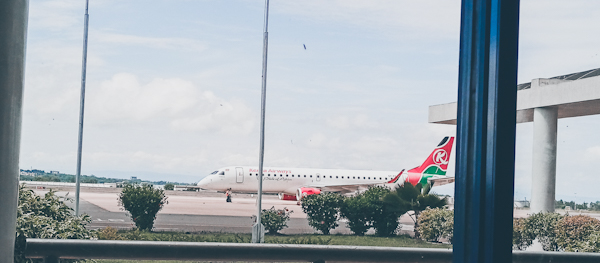
Kenya Airways has announced flight disruptions at Nairobi’s Jomo Kenyatta International Airport (JKIA) following operational delays linked to air traffic control measures.
In a customer update issued Monday, February 16, the airline explained that the delays stem from contingency protocols introduced by the Kenya Civil Aviation Authority (KCAA) to safeguard aviation safety and keep services running.
“We are currently experiencing air traffic control operational delays at Nairobi’s Jomo Kenyatta International Airport (JKIA), affecting certain departures and arrivals,” the airline said.
Kenya Airways Disruptions
-
- Cause: Air traffic control contingency measures at JKIA (effective Feb 16, 2026).
- Impact: Delays affecting certain departures and arrivals; schedules may change.
- Airline Response: Kenya Airways working with KCAA and airport stakeholders to stabilise operations.
- Passenger Advice:
- Confirm flight status before heading to the airport.
- Monitor Kenya Airways’ app, website, and social channels for updates.
- Use rebooking options if your flight is disrupted.
- Do not travel to the airport without confirmation.
- Travel Context: Visitor arrivals dipped late 2025, but December saw a rebound. Long‑haul traffic to North America surged—departures up 74%, arrivals up 57%.
- Bottom Line: Safety remains the airline’s top priority. Flexibility and real‑time updates are key for minimizing disruption.
Why It Matters
The measures, effective February 16, 2026, are already impacting schedules. Travelers should expect adjustments, including delayed departures and arrivals. Kenya Airways stressed that safety remains its top priority as it works with aviation authorities and airport stakeholders to stabilise operations.
Guidance for Passengers
Kenya Airways has outlined several steps for affected customers:
- Check flight status before heading to the airport.
- Monitor official channels—the airline’s website, mobile app, and social media—for real‑time updates.
- Explore rebooking options online if your flight is disrupted.
- Avoid unnecessary trips: passengers are advised not to proceed to the airport without confirmed flight status.
The Bigger Picture
The disruptions come at a time when passenger traffic through JKIA and other entry points is under scrutiny. According to the Kenya National Bureau of Statistics (KNBS), visitor arrivals declined from 219,570 in October 2025 to 201,684 in November. Yet December saw a rebound: embarked passengers rose 3.5% to 287,914, while landed passengers surged 16.5% to 313,944.
Notably, long‑haul travel is expanding. Departures to North America jumped 74.1% to 4,063, while arrivals from the region grew 57% to 4,906. These figures highlight both the volatility of regional travel and the growing importance of international connectivity.
What This Means for Business Travelers
For entrepreneurs and frequent flyers, the lesson is clear: operational delays can ripple across schedules, meetings, and supply chains. Proactive planning—checking flight status, building in buffer time, and leveraging digital rebooking tools—can help mitigate disruption.
Kenya Airways’ current challenges underscore a broader truth: aviation reliability is as much about systems and coordination as it is about aircraft. For travelers and businesses, staying informed and flexible is the best way to navigate uncertainty.
