



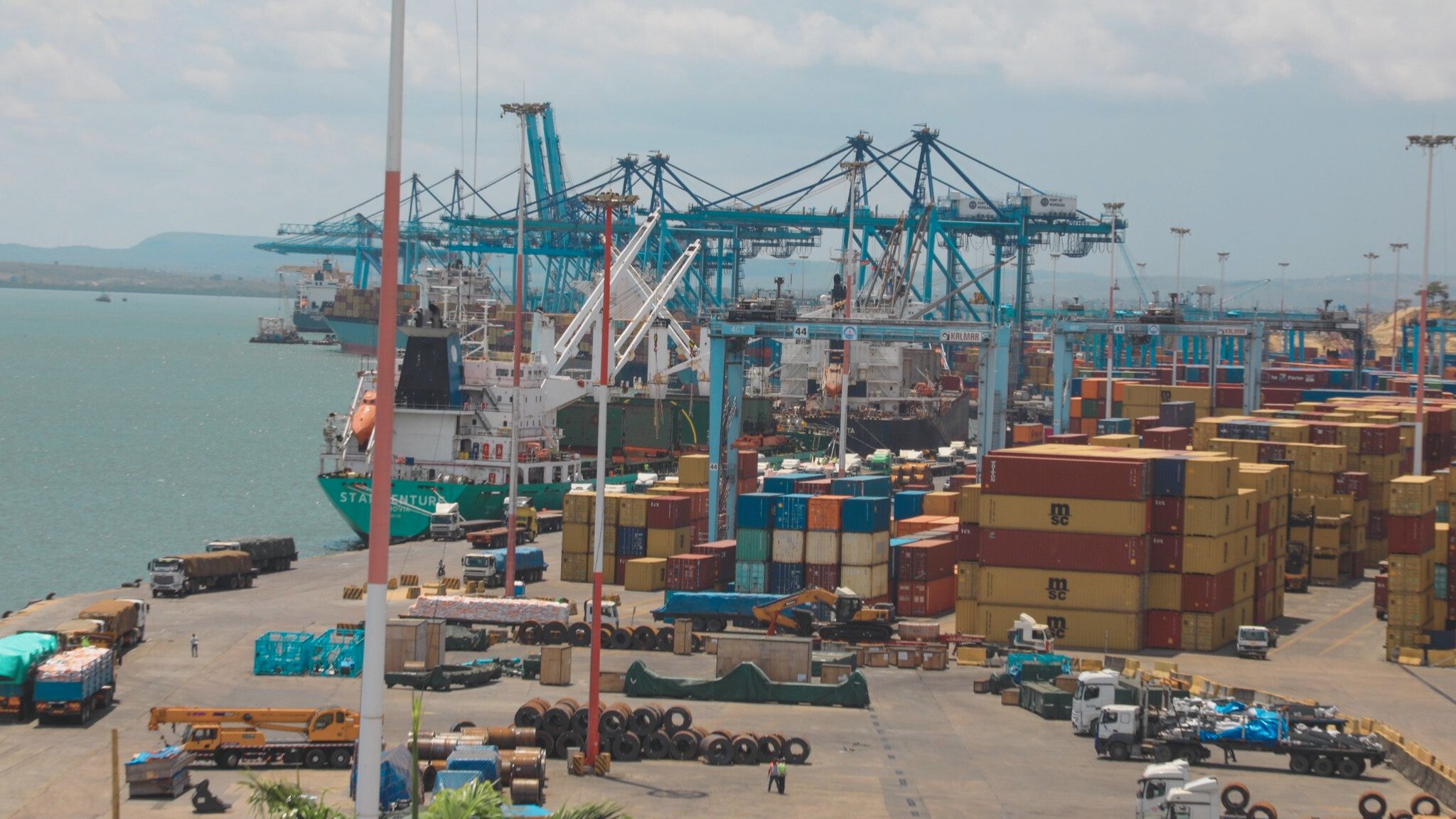
The Port of Mombasa handled 45.45 million metric tons of cargo in 2025, a 10.9% increase from 40.99 million tons in 2024. The growth underscores Kenya’s rising role as a regional logistics hub, supported by strong gains in container traffic and transit cargo.
Container and Transit Cargo Surge
According to Kenya Ports Authority (KPA) Managing Director Capt. William Ruto, container traffic rose to 2.11 million TEUs, up 5.5% from 2.00 million TEUs in 2024. Transit cargo posted even stronger growth, surging 19.5% to 15.88 million tons, compared to 13.29 million tons the previous year.
“These figures reflect the resilience of our ports and the confidence of shipping lines in Kenya’s logistics infrastructure,” Capt. Ruto said during the performance briefing.
Government Push for Efficiency
Cabinet Secretary for Investment, Trade and Industry Lee Kinyanjui said the government is intensifying efforts to enhance efficiency at the Port of Mombasa as part of a broader strategy to strengthen Kenya’s competitiveness in regional and global trade.
Speaking during a meeting with Capt. Ruto, representatives from the Kenya Ship Agents Association, and the Kenya Revenue Authority, the CS emphasized that more than 80 percent of Kenya’s exports and imports are transported by sea, making efficient port operations a critical enabler of trade and industry.
He noted that improving operational efficiency and managing costs at Mombasa and Lamu would help secure a strong market advantage for the country. Ahead of the avocado harvesting season, Kinyanjui stressed the importance of reducing vessel turnaround time, describing avocados as a priority export commodity requiring speed and reliability.
“The government is strengthening cold chain logistics, including the use of the Naivasha Inland Container Depot as a green channel for perishables, and promoting direct shipping solutions to ensure faster movement of agricultural exports to international markets,” he said.
The CS also urged exporters to leverage opportunities under the African Continental Free Trade Area (AfCFTA), citing tea and coffee as commodities that can be scaled up for regional markets.
Growth Across All Facilities
Every port facility registered growth in 2025, with the Port of Lamu recording the highest improvement. Cargo volumes there jumped to 799,161 metric tons, up from just 74,380 tons in 2024, driven mainly by containerized cargo. Container traffic at Lamu reached 55,687 TEUs, supported by new shipping lines introducing regular services.
The inland waterway port of Kisumu also posted notable gains, handling 496,516 metric tons, up 55% from 295,516 tons in 2024. This reflects renewed investment in lake transport and regional trade flows.
Infrastructure Expansion and Modernization
Capt. Ruto attributed the growth to ongoing infrastructure upgrades and modernization initiatives. Key projects include:
- Expansion of berths and yard space at Mombasa, including berths 19B, 23, and 24, expected to add 1.4 million TEUs in capacity.
- Terminal Operating System upgrade, currently at 40% completion, to enhance efficiency.
- Automation of port gates, with gates 23 and 24 already 60% complete.
- Acquisition and modernization of equipment, aimed at streamlining cargo handling and reducing turnaround times.
Outlook: Regional Competitiveness and Market Advantage
The combined efforts of KPA and government stakeholders aim to reduce cargo dwell time, improve coordination among agencies, and position Mombasa as the port of choice for East Africa. With record cargo volumes, rising container traffic, and strategic investments in cold chain logistics, Kenya is strengthening its foothold in regional and global trade.
Kenya and Rwanda Sign MoU to Strengthen Logistics Collaboration
