



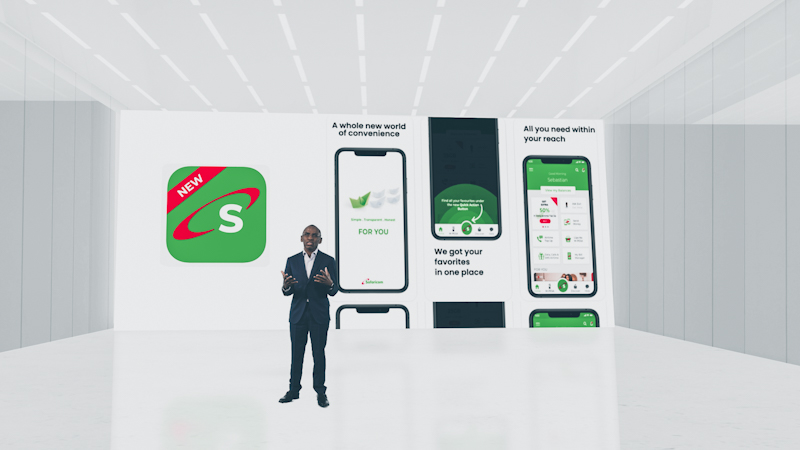
Starting January 2026, buying shares on the Nairobi Securities Exchange (NSE) will be as simple as paying your electricity bill or sending money to a friend from your M-PESA wallet.
The new platform, Ziidi Trader, is wrapping up its pilot phase and promises to change how Kenyans access the stock market.
Breaking Down Barriers to Investing
For decades, investing in shares meant finding a stockbroker, filling out know‑your‑customer forms, opening a trading account, and navigating a process that felt designed to keep regular people out.
Ziidi Trader eliminates most of that friction:
- Browse listed companies directly on your phone.
- Place buy or sell orders instantly.
- Settle transactions through M-Pesa, with funds moving in and out of your wallet in real time.
- No separate brokerage account is required at the entry stage.
Behind the scenes, trades are managed through an omnibus account structure, pooling investor funds into accounts overseen by licensed brokers.
Why Retail Participation Matters
Despite strong market performance, retail participation in Kenya’s equities has remained stubbornly flat:
- Between 2023 and 2025, active investors grew by just 0.2%, adding only 2,621 traders to reach 1.3 million.
- That’s down from over 2 million in September 2022, even though the NSE briefly crossed the KES 3 trillion valuation mark in November 2024.
By contrast, 37.91 million one‑month active M-PESA users (September 2025) highlight where household liquidity truly resides. NSE Chief Executive Frank Mwiti is betting Ziidi Trader will finally crack open retail investor participation.
Market Volatility: Driving Reforms in African Financial Sectors
Kenya’s Track Record in Mobile Finance
Kenya is no stranger to pioneering mobile‑enabled investing:

- In 2017, the country launched mobile bond trading, a world first.
- The Central Bank’s DhowCSD now allows treasury bill and bond purchases via M-Pesa for transactions up to KES 250,000.
- In December 2024, Safaricom and NSE introduced the Ziidi Money Market Fund (MMF), which by September 2025 had:
- 1.15 million customers (nearly half of Kenya’s unit trust investor base).
- KES 12.6 billion in assets.
- Minimum investment of KES 100, with free deposits and withdrawals via M-Pesa.
Ziidi Trader builds directly on this success, aiming to replicate the MMF’s rapid adoption.
The Mechanics: From Board Lots to Single Shares
Structural reforms underpinning Ziidi Trader make investing more accessible than ever:
| Feature | Old System (pre-2025) | New “Ziidi” Model (2026) |
|---|---|---|
| Minimum trade | 100 shares | 1 share |
| Onboarding | Physical forms/broker visit | Instant digital KYC via M-Pesa |
| Settlement | T+3 | Same-day/near-instant |
| Account structure | Individual CDS account | Omnibus digital wallet |
These changes lower ticket sizes, compress settlement risk, and align equity trading with mobile‑first behaviour.
Regulatory Tensions and Broker Concerns
The initiative has not been without controversy. Earlier this year, stockbrokers accused the NSE of trying to cut them out entirely, even calling for Mwiti’s removal in June.
The omnibus account structure addresses some of those concerns by keeping licensed intermediaries involved, not as gatekeepers.
Safaricom’s Fintech Premium
For Safaricom, Ziidi Trader opens another revenue stream beyond person‑to‑person transfers:
- The company earned KES 100 million from the Ziidi MMF (0.6% of the fund’s asset base).
- Financial services already represent 5.2% of M-PESA revenues, KES 4.6 billion in the six months ending September 2025, up 13.9% year‑on‑year.
- Safaricom’s shares have gained 65.4% year‑to‑date, reflecting a “fintech premium” as investors value it beyond its telco status.
Why This Matters for Africa’s Capital Markets
Kenya’s experiment offers a potential template for other mobile‑money‑dominant markets:
- Ghana, where mobile money penetration far exceeds brokerage reach.
- Tanzania and Uganda, which share similar telco‑led ecosystems but shallow equity participation.
If successful, Ziidi Trader reframes capital market deepening not as a broker‑led or bank‑led challenge, but as a payments‑led distribution problem. Exchanges align with the rails that already intermediate everyday financial life.
Festive Season, Travel, and Financial Comfort with Absa Life
