



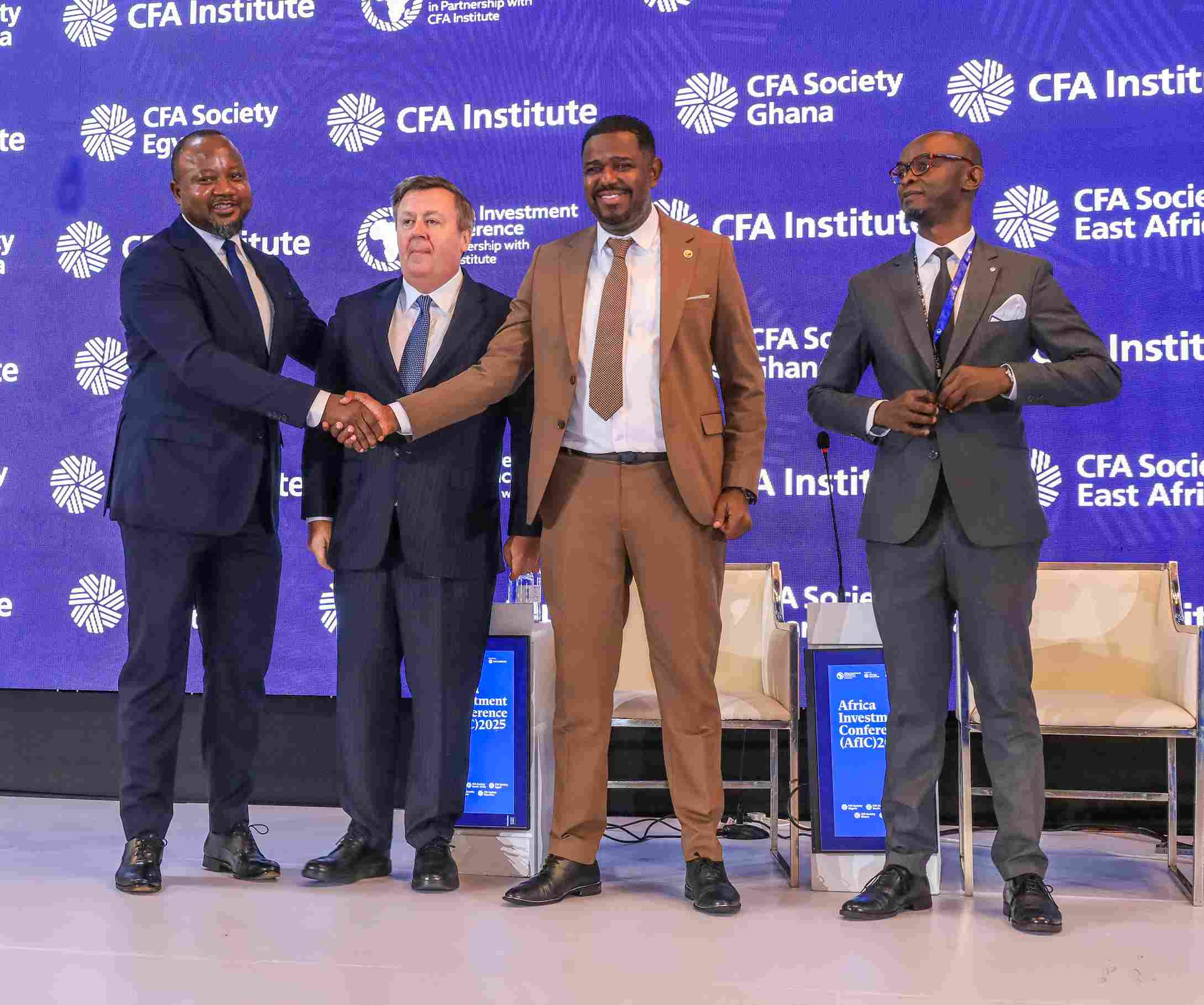
Experts at the Africa Investment Conference (AfIC) 2025 in Nairobi stressed that Africa’s growth must be financed internally, urging governments to deepen local capital markets and reduce reliance on external aid.
“Africa cannot depend solely on external financing. We must unlock capital within our borders,” said Francis Nasyomba, president of CFA Society East Africa.
Kenya Positions Itself as Regional Investment Gateway
Kenya’s Principal Secretary for Investment Promotion, Abubakar Hassan Abubakar, highlighted reforms aimed at improving the ease of doing business, strengthening investor protections, and creating a predictable regulatory environment.
“We are committed to positioning Kenya as a gateway for investment into the region,” Abubakar noted, underscoring the government’s shift toward public‑private partnerships (PPPs) to fund development projects instead of borrowing or aid.
Demographics Driving Financing Urgency
Africa’s rapid population growth, urbanisation, and rising demand for infrastructure and technology are intensifying the need for sustainable financing.
Experts warned that external loans alone cannot meet the continent’s $100 billion (Sh12.9 trillion) annual infrastructure gap.
Mobilising domestic capital will be key to funding transport, energy, and digital infrastructure, while also fostering innovation and entrepreneurship.
Regional Cooperation and Market Connectivity
Speakers emphasised the importance of cross‑border financial market linkages to boost liquidity and investor confidence. Harmonising regulations and building regional investment platforms could accelerate intra‑African capital flows, making local exchanges more attractive to global investors.
“AfIC is not just about conversation. It is about action, aligning policymakers, capital providers, and market practitioners to deliver solutions,” Nasyomba added.
East Africa 2026 Growth Outlook: Kenya, Uganda, Tanzania, Rwanda
Untapped Capital Pools Across Africa
The continent holds up to $6 trillion in untapped funding across insurance, pension funds, banking, and retail sectors, much of which is currently invested abroad.
- African pension funds alone control $1.4 trillion (Sh180.9 trillion), but only 12% is invested intra‑Africa.
- Nearly 80% of this capital is tied up in government bonds and treasury bills rather than projects.
- Experts urged a shift toward bankable projects that can attract risk‑adjusted returns and unlock liquidity.
Governance and Investor Confidence
Oyebanji Fehintola, Executive Board Member of the Africa Finance Corporation (AFC), stressed that governance is critical:
“Every single dollar, whether domestic savings, pension capital, or international investment, will only flow to well‑governed, well‑structured, and well‑managed markets.”
AFC has already invested over $16 billion (Sh2.1 trillion) across 36 African countries in energy, transport, logistics, and industrialisation.
Notable Investments Highlighted at AfIC 2025
- Dangote Group is expanding cement and fertilizer capacity in Ethiopia and Tanzania with investments exceeding $2 billion (Sh258.5 billion).
- KCB Group is announcing major investments in local technology.
- NSSF Uganda is allocating long‑term pension capital into infrastructure and now holds $4.7 billion (Sh607.5 billion) in assets.
- Talanta Sports City (Kenya) is financed by domestic capital, with $200 million (Sh25.9 billion) mobilised internally.
- Pension and sovereign funds in South Africa, Nigeria, Egypt, and Ghana are increasing allocations into African markets.
Outlook: Africa Investing in Africa
The conference theme, “Africa Investing in Africa: Solutions to Challenges,” reflects a growing consensus: Africa must finance its own future. By mobilising domestic capital, strengthening governance, and building regional market connectivity, the continent can reduce dependence on aid and external debt while unlocking sustainable growth.
Kenya’s Private Equity Moment: Local Vision, Global Leverage
