


Aliko Dangote wants $40 billion and five years to build an industrial operation that could reshape how Africa fuels its economies and feeds its people and he wants African capital markets to help pay for it.
The Dangote Group has announced it needs at least $40 billion through 2030 to fund an expansion that would more than double the capacity of its Lagos refinery and quadruple urea fertilizer production. The plan, branded Vision 2030, targets $100 billion in annual group revenue by the end of the decade. The African Export-Import Bank, which is backing the programme, confirmed the figures to Bloomberg.
The IPO That Could Rewrite African Capital Markets
At the centre of the financing strategy sits a proposed $22 billion initial public offering on African exchanges, a listing that would surpass every IPO ever conducted on the continent.
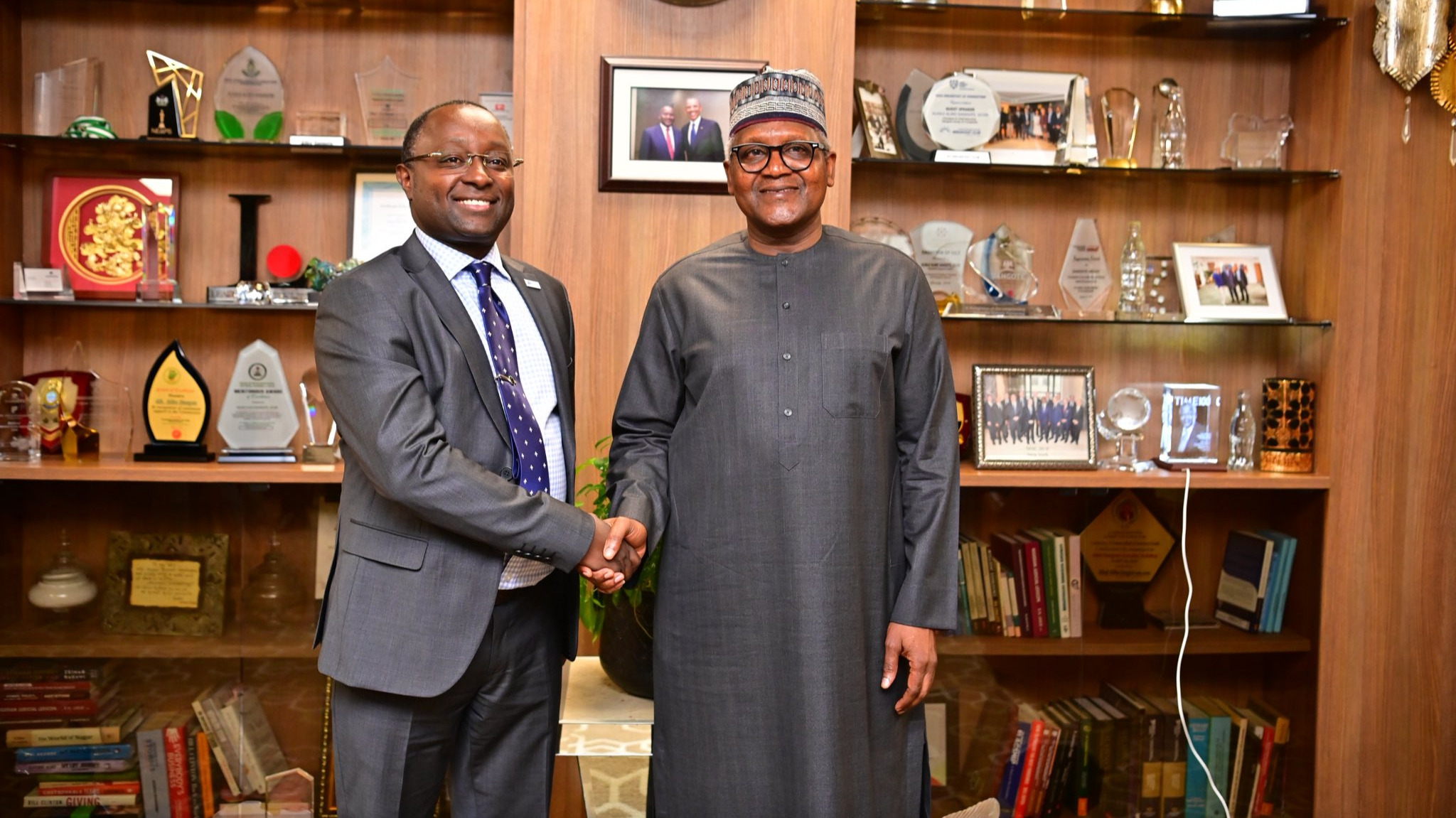
Nairobi Securities Exchange CEO Frank Mwiti travelled to Lagos last week for direct talks with Dangote at the refinery and fertilizer plant in the Lekki Free Zone. The two discussed how the NSE and other African exchanges could anchor the offering, channelling capital raised from African investors directly into expanding African infrastructure, without routing the transaction through London, New York, or any foreign bourse.
“African capital markets are backing African champions,” Mwiti said after the meeting. “The infrastructure is here. The ambition is here.”
The proposed structure represents a deliberate departure from the model that has historically sent the continent’s largest fundraising exercises offshore.
Mwiti framed the potential listing as a test of whether African public markets now carry the depth and appetite to finance industrial assets at this scale on their own terms. No timeline, lead exchange, or formal listing structure has been announced.
Last week, I met Aliko Dangote at his refinery and fertilizer plant in Lagos.
We discussed how @NSE_PLC and other African exchanges can support what could be Africa’s biggest IPO yet: a $22B offering to expand Dangote’s refinery business.
African capital markets are backing… pic.twitter.com/kUW5bTi5j4
— Frank Mwiti (@mwiti_frank) April 10, 2026
A Refinery Built to Supply a Continent
The Dangote Petroleum Refinery currently processes 650,000 barrels per day, making it the world’s largest single-train facility. The expansion would push that figure to approximately 1.4 million barrels per day, positioning Nigeria as a potential anchor for West Africa’s energy supply at a moment when the Persian Gulf conflict has exposed how deeply import-dependent African economies remain.
Nigerian authorities have already responded to the pressure, increasing crude allocations to the refinery to sustain domestic fuel production and contain shortages. The expansion would entrench that supply role at a regional scale.
From Fertilizer Producer to Global Leader
Fertilizer output tells an equally significant story. Dangote currently produces 3 million metric tonnes of urea annually. Vision 2030 targets 12 million metric tonnes, a fourfold increase that analysts say would make Dangote the world’s largest urea producer and fundamentally alter Africa’s dependence on imported crop nutrients.
The timing matters. Global fertilizer shortages, driven by the same Persian Gulf conflict disrupting fuel markets, have pushed input costs sharply higher for farmers across the continent. Expanded domestic production would give African agriculture a buffer it has never had.
Who Is Financing the Plan
Financial institutions have moved quickly to back the expansion. The African Export-Import Bank has committed $2.5 billion as part of a $4 billion senior loan, a signal of institutional confidence in both the scale and the strategic logic of the project.
The IPO, if it proceeds, would represent the largest single mobilisation of African public capital in history. The fact that the NSE is among the exchanges in active conversation about anchoring the listing reflects a broader shift in how the continent’s financial infrastructure is positioning itself, not as a secondary venue for smaller transactions, but as a credible home for deals that compete with any exchange in the world.
What It Means for the Region
For Africa, this expansion carries consequences well beyond a single company’s balance sheet. Higher local fuel production reduces the exposure of African economies to global supply shocks.
Cheaper, domestically produced fertilizer strengthens food security across a region where import costs have climbed sharply. Stronger regional supply chains reduce the logistical vulnerability that the current crisis has laid bare.
A successful Vision 2030 would cement Nigeria’s position as an industrial anchor for the continent. A successful IPO on African exchanges would prove something larger still, that African capital, mobilised through African markets, can build at a scale the region has not attempted before.
