


The Kenya Revenue Authority board has declined to renew the contract of Commissioner General Humphrey Wattanga, placing him on terminal leave and opening a leadership transition at a critical point in the financial year.
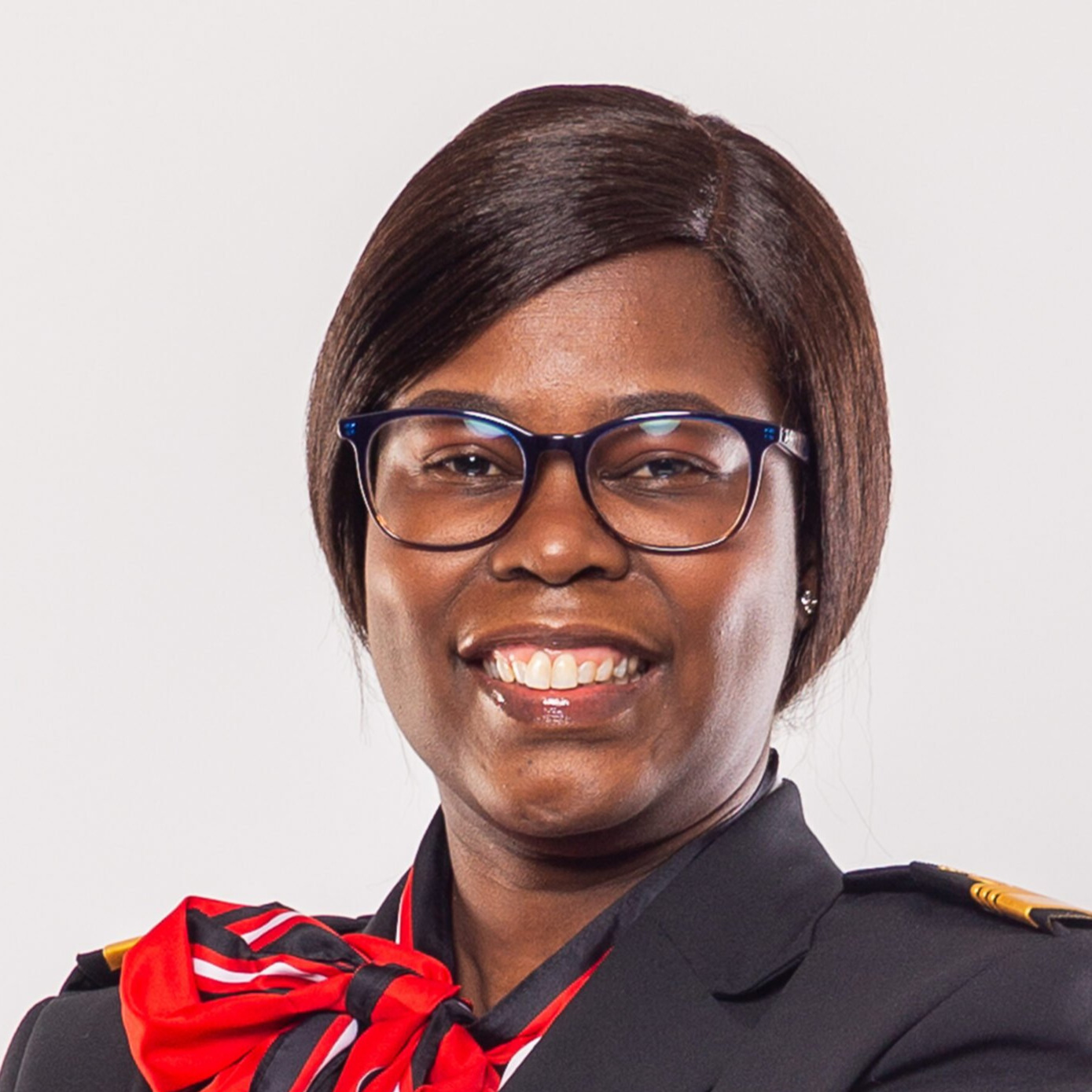
In a statement dated April 8, 2026, the board confirmed that Lilian Nyawanda, currently Commissioner for Customs and Border Control, will serve as acting Commissioner General while the authority runs a competitive recruitment process for a substantive replacement.
The board credited Wattanga with advancing the authority’s mandate and driving organisational restructuring reforms during his tenure.
Leadership change arrives mid-revenue push
The exit lands as KRA races to close a significant revenue gap in the final quarter of the financial year. By end of March, the authority had collected Sh2.038 trillion against a target of Sh2.122 trillion, leaving a shortfall that has sharpened pressure on enforcement and compliance teams.
KRA targets Sh2.97 trillion for the full financial year, meaning the final stretch must absorb a disproportionate share of outstanding collections.
Who is Lilian Nyawanda?
Nyawanda brings over two decades of experience in customs, tax administration, and trade compliance to the acting role. She describes herself plainly: “I am a wife. I am a mother to teenagers. I am a scholar. I am a PhD in public policy. I am passionate about influencing public policy for positive change.”
She returned to KRA in April 2021 as Commissioner for Customs and Border Control, a role she has held for more than five years. Before that, she served as Customs and Excise Manager for Africa at Diageo and spent over seven years as Customs Manager at East African Breweries Limited, where she led tax governance, compliance and risk management, working capital initiatives, and government relations.
Earlier in her career, Nyawanda consulted at Deloitte, handling customs and international trade matters for clients, resolving tax authority audits, and seconding into a leading consumer goods company to streamline import and export processes. She began her professional life as a Revenue Officer at KRA, where she worked in customs clearance and revenue collection from 2003 to 2009. She also taught tax law part-time at Strathmore Law School.
On leadership, Nyawanda holds a view shaped by experience rather than theory. “Being a leader is really walking the journey with the team,” she has said, “and allowing those who have more experience and more capability or the unique skills, allowing them to thrive and shine, and you walk along the journey together.” She adds: “We lose together, we win together.”
Her philosophy on navigating institutions carries a practical edge. “Do not assume that your leader knows what you want. Do not assume that the journey will be straightforward. Be courageous enough to reach out for help, to ask the questions, to seek solutions.”
Digital infrastructure faces ongoing scrutiny
The transition follows sustained internal focus on the performance of KRA’s digital tax infrastructure. Recent disruptions to the Integrated Customs Management System disrupted cargo clearance at the Port of Mombasa and Jomo Kenyatta International Airport, drawing attention to the reliability of platforms that underpin both customs revenue and trade facilitation.
Nyawanda’s deep familiarity with customs operations positions her to address these concerns directly. Having spent the better part of two decades working at the intersection of trade, compliance, and revenue systems, she understands the operational weight of system failures on clearance timelines and revenue flows.
Separately, the authority has expanded deployment of the Electronic Tax Invoice Management System to sharpen real-time monitoring of transactions, particularly in value added tax.
Enforcement drive targets the informal sector
KRA has also moved to widen the tax net through digital channels. New tools include a WhatsApp-based filing service powered by an AI chatbot and USSD options designed to reach taxpayers without smartphones. Both measures aim to draw more informal sector activity into the tax system while tightening compliance among registered businesses.
Nyawanda steps in with immediate operational demands
Nyawanda assumes office with continuity as her core mandate. Her background in customs administration places her at the centre of one of KRA’s most sensitive revenue streams, where import duties and trade volumes carry significant weight in overall collections.
She has spoken candidly about resilience in difficult seasons. After a serious back condition required surgery and took her off course for close to two years, she chose to seek help rather than withdraw. “The difficulties will always come,” she reflected, “but in that process it is good to appreciate the season you are in, but also seek solutions and help. Reach out to ask for help and get a support system to help you journey through that season. Seasons come and go.”
That experience appears to have shaped how she approaches pressure. She does not perform certainty. She builds systems, leans on teams, and keeps moving.
The board has confirmed that recruitment for a new Commissioner General will begin, but the immediate priority remains stabilising operations, sustaining collections, and resolving system performance issues before the financial year closes.
Wattanga nominated as High Commissioner to South Africa
Within hours of his KRA departure, President William Ruto forwarded Wattanga’s name to the National Assembly as part of a new round of foreign service nominations. Wattanga has been proposed as Kenya’s High Commissioner to South Africa, based in Pretoria, one of the country’s more established diplomatic missions on the continent.
The nomination remains subject to parliamentary vetting and approval before any formal posting proceeds.
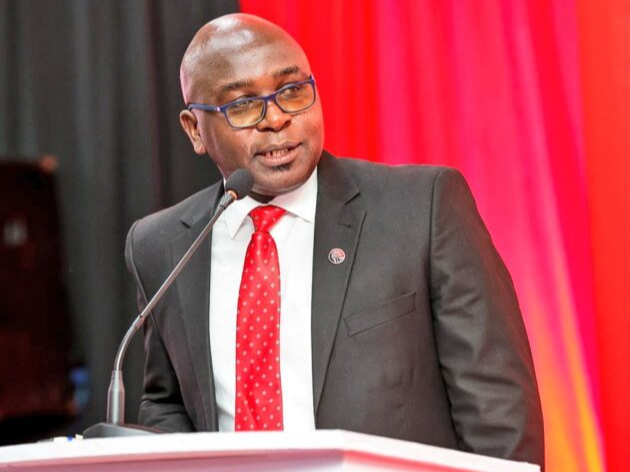
Who is Humphrey Wattanga?
Wattanga joined KRA on August 22, 2023, bringing over two decades of international experience in corporate finance and capital markets.
Before his KRA appointment, he served as Managing Director of Meghraj Capital Group, the investment banking arm of the Meghraj Group, where he led strategy on mergers, acquisitions, equity and debt raising, and cross-border transactions across East Africa, India, and Japan.
Prior to that role, he completed a six-year term as Commissioner and Vice Chair of the Commission on Revenue Allocation, ending in December 2022.
Wattanga began his career in the United States at AT&T before relocating to South Africa for a decade as Senior Partner at AFCORP Investments Limited, a specialist corporate finance firm structuring capital transactions across the continent.
Among his notable contributions, he helped design and implement a mobile gateway platform that connected Kenya’s mobile money networks to the Nairobi Securities Exchange, providing the infrastructure used to launch the M-Akiba retail bond.
At the Commission on Revenue Allocation, he led performance reviews of county revenue systems and guided a multi-agency effort to develop a Single Integrated County Revenue Management System.
Wattanga also served on the investment committee of Kenya Climate Ventures, a climate-smart platform supporting small and medium enterprises, and holds Platinum membership with the Kenya Institute of Bankers.
He earned a Master of Business Administration in Information Systems Strategy and Economics from the Wharton School at the University of Pennsylvania and graduated cum laude in Biochemical Sciences from Harvard University.
