



Kenya generates roughly 8 million tonnes of waste every year. More than 95% of it goes unrecycled. Around 73% risks leaking into the environment entirely. For a country committed to cutting greenhouse gas emissions by 30% by 2030, this is both a climate liability and, increasingly, an economic one.
A new investment prospectus published by Invest Kenya in March 2026 reframes the problem. Titled Waste Management and Circular Economy Investment Opportunity in Kenya, the document argues that Kenya’s waste streams represent a largely untapped resource base and that with coordinated investment, the country could unlock up to $730 million in value across six sectors, add 0.5% to GDP growth, and generate approximately 46,000 additional jobs by 2030.
The report also addresses a longstanding barrier to investment: fragmented information about the sector and limited visibility of emerging businesses and projects. By consolidating pipeline opportunities and mapping the enabling policy landscape, Invest Kenya aims to give investors the clarity needed to commit capital at scale.
The Climate Stakes
Unmanaged waste is a direct climate threat. Landfill methane is a potent greenhouse gas, and the prospectus notes that growing volumes of improperly disposed waste already put pressure on the natural ecosystems underpinning Kenya’s tourism sector — worth 8.2% of GDP. Scaling circular economy infrastructure reduces landfill methane, cuts pollution, and relieves pressure on those ecosystems simultaneously.
The stakes extend beyond Kenya’s borders. Speaking at the close of the Kenya International Investment Conference (KIICO), Deputy President Prof. Kithure Kindiki underscored the continental dimension: Africa holds nearly 40% of the world’s renewable energy potential but received only about 2% of global renewable energy investment over the past decade. He pointed to the 2023 Nairobi Declaration on Climate Change as a foundation for African leaders to convert climate commitments into concrete investment flows.
“Investors are looking for destinations that combine sustainability, competitiveness, and long-term growth,” Prof. Kindiki said. “In this emerging global order, we see this as Africa’s moment.”
Globally, the circular economy market is projected to double from $2.9 trillion to $5.8 trillion by 2034, with roughly 70% of countries now implementing circular economy policies or roadmaps. Kenya is among them, though its national Circular Economy Strategy and Implementation Plan (CESIP) remains in development.
A Broken Collection Chain
The prospectus maps where Kenya’s waste system currently fails. Of total waste generated, 45% goes uncollected. Of the 55% that is collected, only around 4% is ultimately recycled. The informal sector absorbs much of the gap: an estimated 45,000 waste pickers operate across Kenya, recovering around 80% of all plastic that is reclaimed. Yet these workers remain largely excluded from formal value chains, face unstable incomes tied to fluctuating commodity prices, and struggle to meet the traceability requirements emerging under Extended Producer Responsibility (EPR) legislation.
Policy Leadership Creating an Enabling Environment
Kenya has moved faster than many of its regional peers on policy. The Sustainable Waste Management Act (2022), the East African Single-Use Plastics Bill (2023), and the National Sustainable Waste Management Policy (2021) collectively align Kenya with tightening global standards. Advocates say these frameworks — particularly EPR — are already helping attract private capital into the sector.
Access to the EU market, worth approximately €1.96 billion in exports in 2024, increasingly depends on meeting circularity requirements such as the EU’s food-safe recycled plastic regulation.
“Through progressive legislation… Kenya is aligning with global circular economy standards and creating an enabling environment for circular business growth,” the prospectus states.
The Regional Opportunity
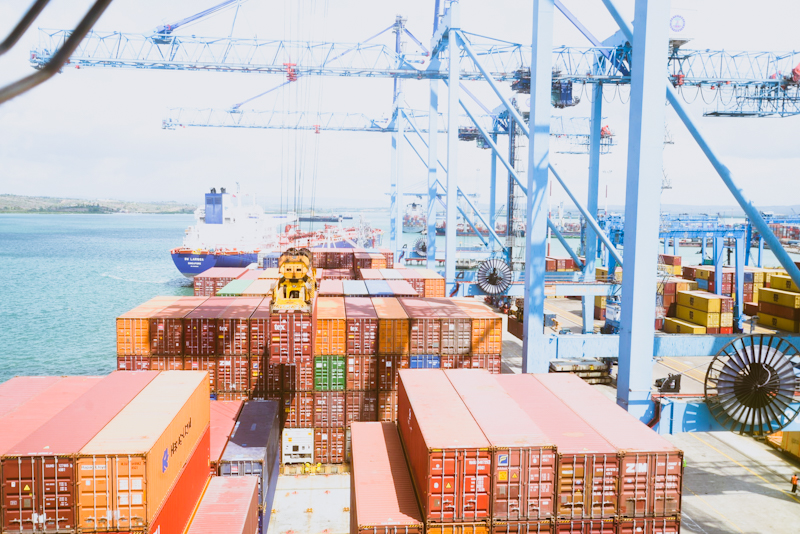
Kenya’s geographic and logistical position strengthens its case. The Port of Mombasa and the Northern Corridor enable both the aggregation of recyclable feedstock from across the region and the export of processed secondary materials. The prospectus positions Kenya not just as a domestic market, but as a potential anchor for East African circular supply chains and a standards-compliant supplier to international buyers.
More than 120 circular economy businesses already operate across the country’s value chain. Firms are converting plastic waste into construction bricks, processing agricultural residue into bioenergy and fertiliser, and using pyrolysis to transform plastic into approximately 9,000 litres of fuel per day. Kenya’s startup ecosystem raised $984 million in 2025, and the prospectus identifies it as a frontrunner for climate finance in Sub-Saharan Africa.
Investment Momentum and the Road Ahead
The prospectus launched against a backdrop of tangible momentum. Invest Kenya CEO John Mwendwa noted that $2.9 billion in investments had already been announced following the conference’s opening. He added that Invest Kenya is accelerating a Project Preparation Facility to develop bankable, investment-ready projects, while expanding de-risking instruments — including guarantees, blended finance, and risk-sharing mechanisms — to lower the barriers for private capital entering the sector.
The document identifies four investor archetypes needed to scale the circular economy: early-stage innovation capital, growth finance for asset-heavy SMEs, investment in digital platforms and circular services, and long-term infrastructure funding for large-scale material recovery and waste-to-energy facilities. It calls for coordinated action across government, the private sector, development finance institutions, and civil society to move “from ambition to implementation.”
