



Africa is no longer a footnote in global strategy. It is the main event and the world’s three biggest economic powers know it.
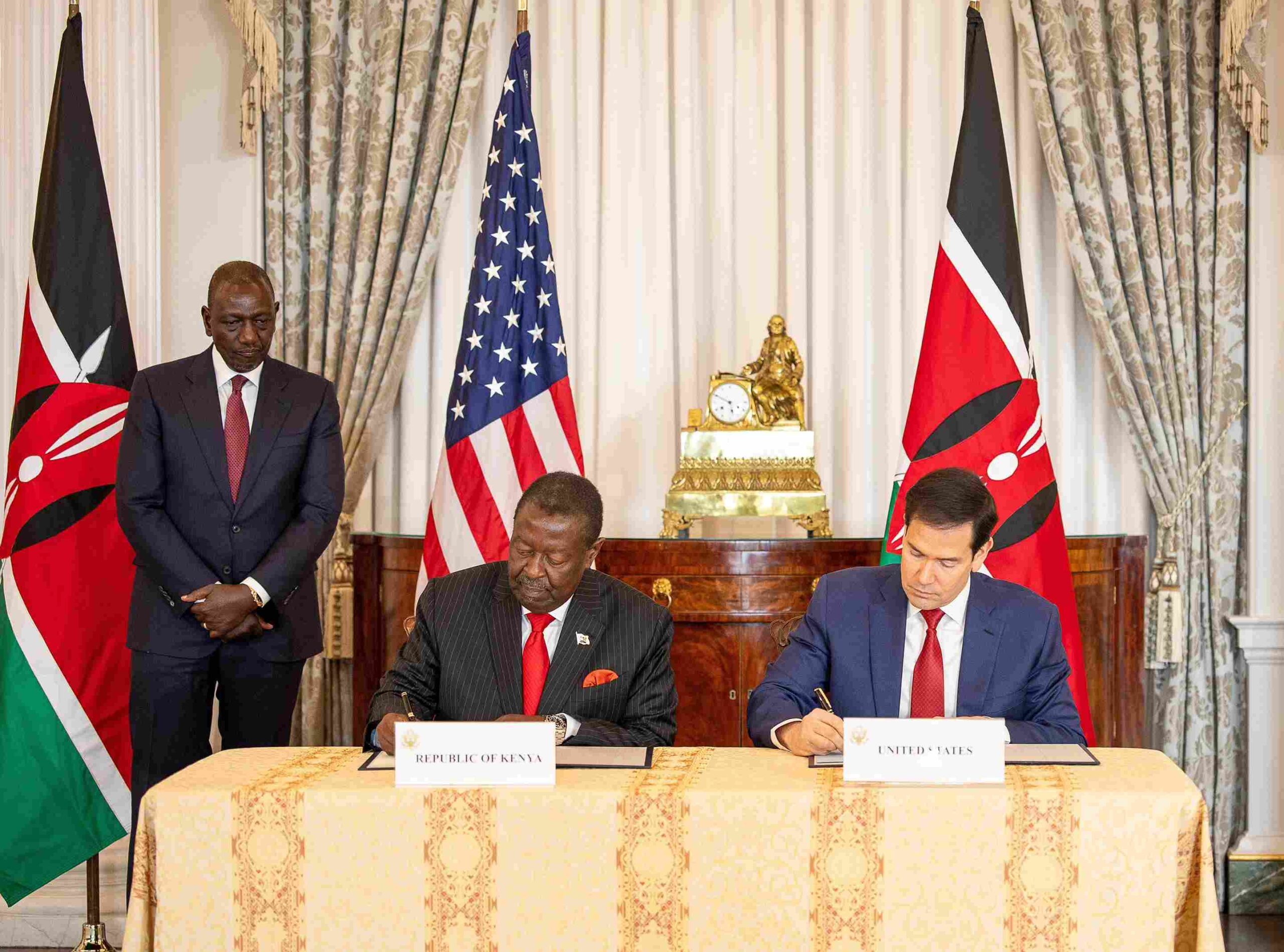
On 19 March 2026, Nick Checker, the U.S. State Department’s Senior Bureau Official for Africa, stood before the Powering Africa Summit in Washington and delivered the clearest articulation yet of the Trump administration’s approach to the continent. The message was transactional, unapologetic, and revealing.
“The United States is resetting its relationship with Africa based on mutually beneficial partnerships,” Checker said, “rather than aid, dependency, and spreading divisive ideology.”
Gone is the language of development assistance. In its place: deals, supply chains, and commercial diplomacy.
The administration’s framework rests on three pillars: trade promotion, restructured foreign aid, and conflict management. The commercial pillar is doing the heaviest lifting. Washington has retooled its embassies to function as deal teams, pushing African governments to open tenders and level playing fields for U.S. companies. Since January 2025, U.S. embassies have supported over 60 transactions worth more than $25 billion, with export values to sub-Saharan Africa tracking roughly 23 percent above the previous year’s pace.
Critical minerals sit at the heart of this pivot. Africa holds vast reserves of cobalt, copper, graphite, coltan, and rare earth elements; the building blocks of electric vehicles, semiconductors, and defence systems. Washington’s most significant move came through the U.S.-DRC Strategic Partnership Agreement, signed under the broader Washington Accords, which aims to redirect Congolese mineral flows westward rather than eastward. The Lobito Corridor, a railway and logistics network stretching from the copper belt in Zambia through the Democratic Republic of Congo to the Angolan port of Lobito, serves as the physical spine of this ambition.
Checker framed the foreign aid shift bluntly: “U.S. foreign assistance is not charity — it is strategic capital to be wisely invested to advance U.S. interests.” Countries seen as misaligning with American priorities face aid reductions. The language of “zero-tolerance for waste, fraud, and abuse” signals a harder conditionality than previous administrations applied.
Whether this transactional approach constitutes a genuine upgrade in U.S. engagement or a rationalisation for reduced commitment remains contested. The administration points to President Trump meeting 13 African heads of state in his first year — described as a record — as evidence of deepened ties. Critics counter that 34 U.S. ambassador posts across Africa remain vacant, and that China fills every one of those diplomatic gaps.

China Controls the Infrastructure
While Washington repositions, Beijing has been building and the scale is difficult to overstate.
China’s Belt and Road Initiative engagement in Africa surged 283 percent in 2025 to reach $61.2 billion, making the continent the single largest recipient of Chinese construction activity globally, according to research from Fudan University and Griffith University. Chinese policy banks issued $24.9 billion in BRI-linked mining loans in the first half of 2025 alone, more than in any previous full year since the initiative launched in 2013.
The headline numbers, however, obscure something more strategic: China has moved beyond raw extraction toward controlling entire value chains. In the DRC, Chinese firms operate not just as miners but as processors and logistics operators, embedding themselves across the cobalt and copper supply chain from pit to port. A $23 billion integrated hydrocarbon agreement signed with the Republic of Congo in September 2025, covering onshore oil and gas permits — illustrates how Beijing packages financing, construction, and operational expertise into a single bundled offer that few Western competitors can match.
China currently controls over half of global critical minerals production and an estimated 87 percent of processing and refining capacity. It produces nearly 70 percent of the world’s rare earth minerals. These are not market positions built overnight, they reflect decades of patient, state-backed investment that Western capitals consistently underestimated.
The infrastructure China has built across Africa now serves its mineral ambitions directly. The Tanzania-Zambia Railway, backed by Chinese financing and construction firms, strengthens the eastward corridor for mineral exports. The contrast with the Lobito Corridor, Washington’s preferred westward route, reveals the deeper geopolitical contest: a literal competition over which direction Africa’s wealth flows.
African governments are not blind to the leverage this creates. An increasingly vocal concern is that opaque Chinese financing structures have deepened debt exposure while limiting local value capture. Several governments have begun pushing back, seeking to renegotiate terms or open their sectors to competing investors, which is precisely the opening U.S. and European diplomats are trying to exploit.
Europe Plays the Long Game
The European Union has staked out different ground: $150 billion (approximately €150 billion) committed to Africa under its Global Gateway initiative through 2027, with a broader €400 billion target across all regions. Europe positions this as an alternative model — transparent, sustainable, governance-linked — to China’s infrastructure-heavy approach.
The pitch is sophisticated. Where China bundles infrastructure with resource access and the U.S. now emphasises commercial deals, the EU frames its engagement around co-ownership and institutional capacity. Flagship projects range from the Blue Raman submarine cable linking Europe to India via Eastern Africa, to transport corridors in Kenya and Mozambique, green hydrogen development in Namibia and Egypt, and a €4 billion initiative supporting young entrepreneurs and SMEs across the continent.

A renewed partnership agreement between the European Commission and the African Development Bank, formalised at the Italy-Africa Summit in Rome, channels EU blending finance and guarantees — now totalling €972 million — to de-risk private sector investment in African infrastructure.
Europe’s motivations are equally unsentimental. Critical minerals, green hydrogen, and stable migration patterns are strategic priorities for Brussels. The EU’s political guidelines explicitly reference “clean trade and investment partnerships” to secure raw materials and clean energy along diversified supply chains. Africa’s green hydrogen potential, in particular, positions the continent as a prospective energy exporter to a Europe anxious to reduce dependence on Russian gas and diversify energy sourcing.
The persistent challenge for the Global Gateway is the gap between commitment and delivery. African leaders welcome the principles but have learned to distinguish pledges from projects. The EU’s insistence on governance conditions and environmental standards, while credible, slows deployment in contexts where China moves with fewer preconditions and the U.S. now operates with sharper commercial focus.
What Africa Wants
The most consequential question is not which power wins the competition — it is whether Africa extracts durable value from it.
By 2050, one in four people on the planet will live in Africa. The continent’s consumer spending is projected to exceed $16 trillion. Nine of the world’s 20 fastest-growing economies are already African. These are not development statistics; they are market fundamentals.
African governments increasingly understand that global demand for their minerals gives them leverage they have rarely held before. The DRC-Zambia transboundary battery and EV special economic zone — launched in 2025 — reflects a deliberate attempt to process minerals domestically rather than export raw ore and reimport finished products. The African Continental Free Trade Area, if implemented effectively, could support regional value chains that serve African industrialisation rather than external supply chains alone.
The risk is that the competition between Washington, Beijing, and Brussels — each pursuing its own strategic interests under the banner of partnership — reproduces old patterns with new vocabulary. Aid rebranded as investment. Extraction dressed as development. Dependency maintained under the language of sovereignty.
What distinguishes this moment is that African governments have more tools, more data, and more options than at any previous inflection point. They can play the DFC against the BRI against the Global Gateway. They can demand processing facilities, not just mining rights. They can insist on transparent terms.
The scramble for Africa is real. Whether Africa shapes its outcome or is shaped by it, depends on decisions being made in Kinshasa, Nairobi, Lagos, and Abuja, not just in Washington, Beijing, and Brussels.
This story draws on remarks by U.S. State Department Senior Bureau Official Nick Checker at the Powering Africa Summit (19 March 2026), the Green Finance & Development Center / Griffith Asia Institute BRI Investment Report 2025, Brookings Foresight Africa 2026, and European Commission Global Gateway documentation.
