


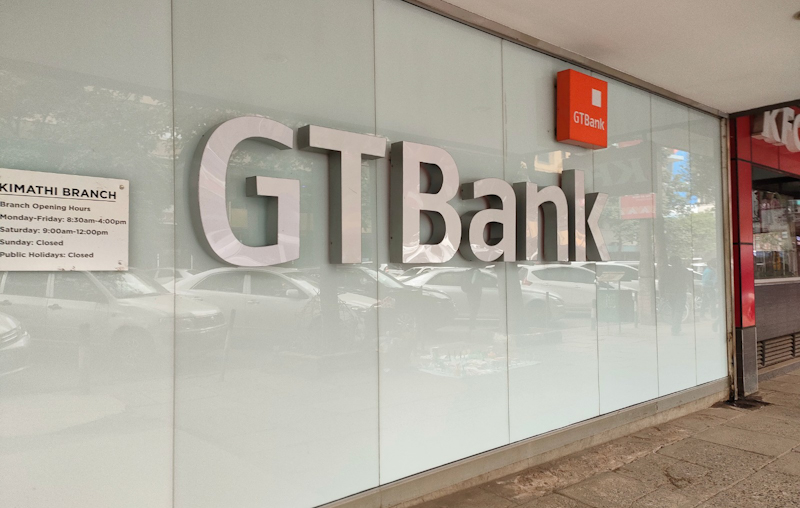
Guaranty Trust Bank (Kenya) Limited has escalated a regulatory dispute to the Competition Tribunal after challenging a ruling by the Competition Authority of Kenya (CAK).
The case stems from a complaint filed by ASL Limited, a long‑standing corporate client, over the management of credit facilities.
Bank Confirms Appeal
In a statement issued Tuesday, GTBank Kenya acknowledged receipt of the CAK ruling dated January 29, 2026. The lender confirmed it had lodged a formal appeal, citing its belief that the Authority’s findings were not supported by evidence.
“The Bank’s conduct throughout its banking relationship with ASL Limited was, at all times, consistent with its contractual obligations and in compliance with applicable banking laws and regulations,” the statement read.
The bank added that the appellate process would provide “a fuller and more balanced review” of the matter.
CAK Findings and Penalties
Kenya’s competition watchdog ordered GTBank Kenya to pay a fine of KSh33.18 million, equivalent to 2% of its 2023 gross turnover, after finding the lender engaged in false and misleading representations and unconscionable conduct.
The Authority also directed the bank to refund KSh13.21 million in fees and charges it deemed improperly levied. Investigators concluded that GTBank:
- Retroactively applied default interest without notice.
- Mischaracterized materially altered credit terms as renewals.
- Charged fees on unapproved facilities.
- Misled ASL about the status of its services.
Background of the Dispute
ASL, a manufacturer and distributor in the construction and industrial sectors, has banked with GTBank since 2001. In July 2021, it secured a suite of credit facilities including overdrafts, letters of credit, guarantees, and working‑capital lines backed by company assets and directors’ guarantees.
The facilities were due to expire in May 2022. ASL sought renewal in January 2022, but months of engagement failed to yield clarity. In June 2023, GTBank granted a three‑month extension while demanding additional security and reducing a trading line from US$5.5 million to US$3.5 million.
A month later, the bank issued a new offer letter cutting limits by another US$3 million. When ASL signaled plans to transfer its facilities to I&M Bank, GTBank issued a default notice in October 2023 and charged KSh13.2 million in backdated default interest.
To avoid disruption, ASL cleared overdraft balances of KSh417.8 million and US$197,802. GTBank later offered a goodwill refund of KSh2.8 million, which ASL rejected, insisting on a full refund.
Regulator’s Position
The CAK concluded that GTBank abused its superior bargaining power by:
- Unilaterally recalling facilities.
- Imposing conditions not necessary to protect legitimate interests.
- Backdating charges that placed ASL under financial strain.
In setting the penalty below the statutory maximum of 10%, the Authority said it considered both mitigating and aggravating factors.
GTBank’s Defense
GTBank argued that the facilities were governed by 2021 offer letters permitting interest‑rate variation and default charges. Renewal, it said, was conditional on additional security, and the revised terms reflected its internal risk assessment.
The bank denied coercion, insisting that its refund proposal was a goodwill gesture rather than an admission of liability.
The case now rests with the Competition Tribunal, whose ruling could set an important precedent for how competition law intersects with banking discretion in Kenya’s financial sector.
Until then, GTBank Kenya says it will refrain from further public comment as the appeal proceeds.
