



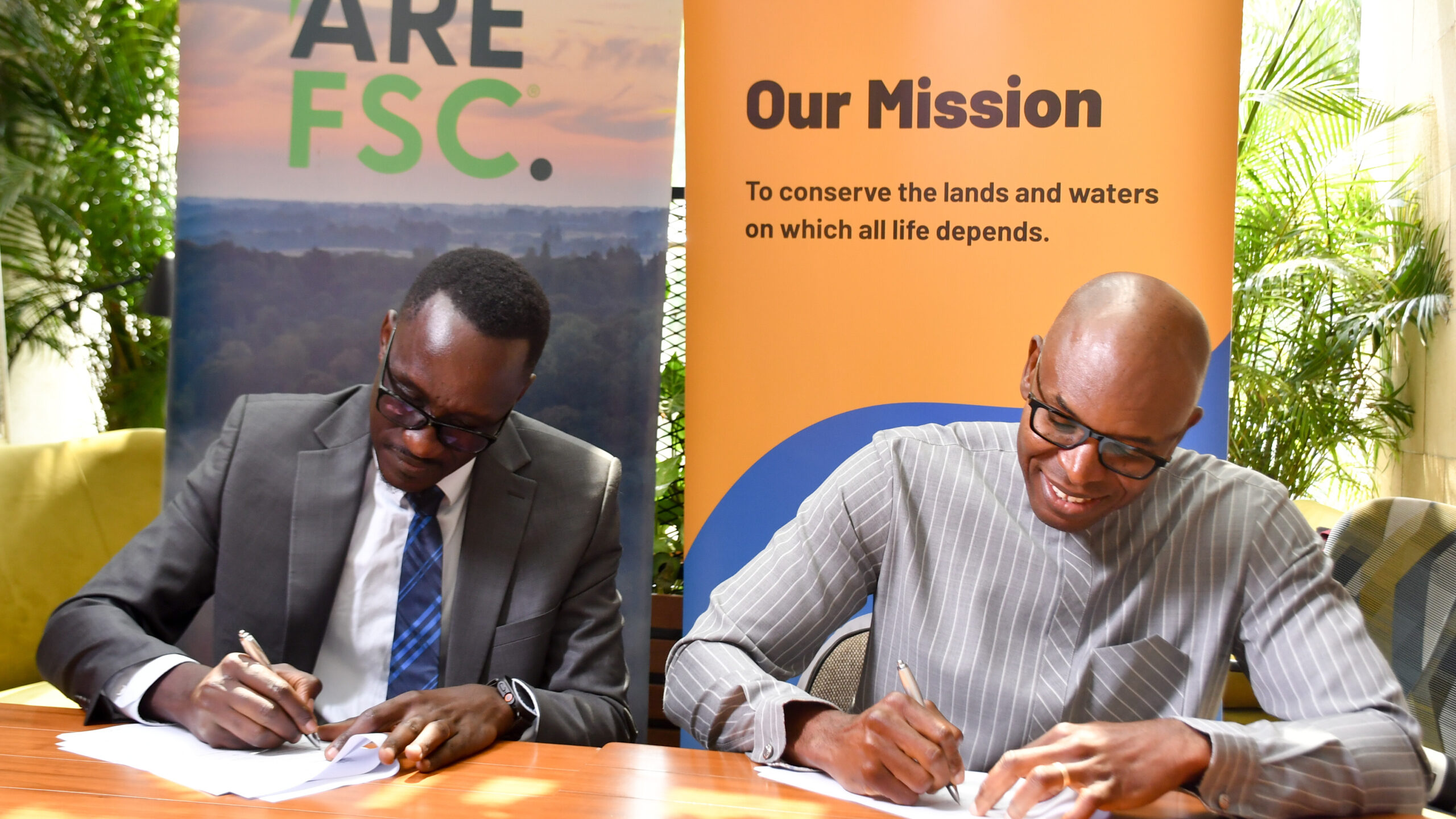
The Nature Conservancy (TNC) and the Forest Stewardship Council (FSC) Africa have signed a landmark agreement to accelerate sustainable forest management and climate‑focused conservation across Africa.
Running through 2030, the partnership sets out a framework to protect forests, cut emissions, restore degraded landscapes, and strengthen livelihoods.
Why Africa’s Forests Matter
Africa’s forests are more than trees. They regulate rainfall, store carbon, safeguard water security, and sustain millions of people. They also shelter extraordinary biodiversity. Yet mounting pressures—deforestation, climate change, and unsustainable land use are too complex for any single organization to tackle alone.
What the Partnership Delivers
By combining TNC’s conservation science and field expertise with FSC’s trusted certification systems and community‑driven approaches, the collaboration aims to:
- Strengthen accountability in forest governance
- Expand responsible forest management practices
- Restore degraded landscapes at scale
- Ensure forests continue to serve both people and nature
Focus on the Congo Basin
Initial efforts will concentrate on the Congo Basin—Cameroon, Gabon, and the Republic of Congo. Here, TNC and FSC Africa will work with governments, forest managers, and communities to improve oversight and deliver measurable results.
The partnership builds on ongoing collaboration in Gabon, where both organizations are helping operationalize forest certification systems, strengthen carbon measurement frameworks, and expand community forest management. It also aligns with continental initiatives to mobilize investment in sustainable forestry and large‑scale restoration.
The Partnership
“This partnership brings together complementary expertise to increase the value of well‑managed forests for climate, nature, and people,” said Ademola Ajagbe, Regional Managing Director, Africa Region, The Nature Conservancy. “The scale of the challenge is too great for any one organization. By working together, we can expand our collective impact and deliver lasting results.”
The collaboration follows the launch of the Zámba Heritage Initiative roadmap, which aims to bring 30 million hectares of African forests under certified sustainable management and restore 5 million hectares of degraded land.
“The Zámba Heritage Initiative is our blueprint for a sustainable future,” said Dr. Peter O. Alele, FSC Africa Regional Director. “This agreement with TNC blends world‑class conservation science with FSC’s rigorous certification standards. Together, we are creating tangible value for Africa’s forests—benefiting climate, nature, and communities.”
Who They Are
The strength of this partnership lies in the credibility of both organizations:
- The Nature Conservancy (TNC) is a global conservation organization working in 76 countries and territories. Guided by science, TNC tackles climate change, conserves lands and waters, and helps cities become more sustainable. Its collaborative approach engages communities, governments, and the private sector to deliver solutions where people and nature thrive. Learn more at nature.org.
- Forest Stewardship Council (FSC) is a non‑profit organization providing the world’s most trusted forest certification system. More than 170 million hectares of forests worldwide are FSC‑certified. Its “check tree” label, found on millions of products, assures consumers that materials are responsibly sourced—from forest to shelf. FSC’s standards are widely recognized as the most rigorous in addressing deforestation, climate, and biodiversity challenges.
Model for Scalable Impact
Partnerships like this demonstrate what is possible when science, certification, and community engagement converge. By expanding responsibly managed forest areas, TNC and FSC Africa aim to strengthen the role of forest landscapes in achieving Africa’s climate and development goals.
Africa’s forests are vital to the planet’s future. This partnership between TNC and FSC Africa is more than an agreement—it’s a commitment to scale solutions that protect nature, empower communities, and secure climate resilience for generations to come.
