



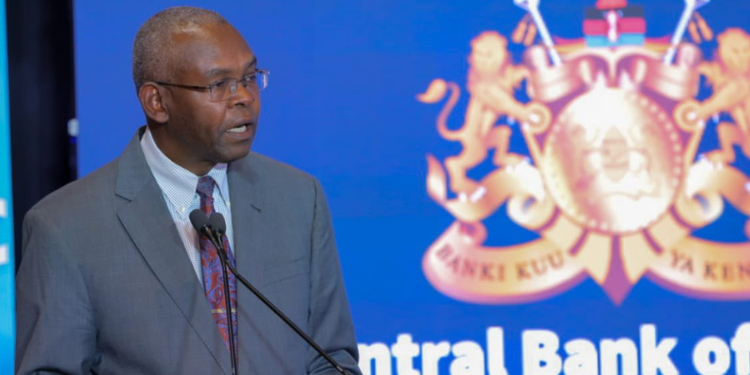
The Central Bank of Kenya (CBK) has lowered its benchmark lending rate by 25 basis points to 9.25%, citing room for further monetary easing amid stable inflation and resilient economic performance.
In its Monetary Policy Committee (MPC) meeting held on October 7, 2025, the CBK announced the reduction of the Central Bank Rate (CBR) from 9.50% to 9.25%, marking the eighth consecutive rate cut.
“The Monetary Policy Committee (MPC) decided to lower the Central Bank Rate (CBR) by 25 basis points to 9.25 percent from 9.50 percent,” the CBK said in its statement.
The Committee noted that the move is intended to stimulate commercial bank lending to the private sector, support economic activity, and maintain stable inflation expectations and exchange rate conditions.
Global and Domestic Outlook
The MPC observed that global growth remained resilient in 2025, buoyed by early exports to the U.S., improved financial conditions, and strong consumer spending. However, growth is expected to decelerate in 2026 due to rising tariffs, weak global demand, and geopolitical tensions.
Global inflation has edged up slightly, driven by food prices and tariffs, but is projected to ease as energy prices decline and demand slows. Central banks in major economies remain cautious about rate cuts.
Domestically, Kenya’s inflation stood at 4.6% in September 2025, up marginally from 4.5% in August, and remains within the target range of 2.5%–7.5%. Core inflation dropped to 2.9%, largely due to falling prices of processed foods such as maize flour.
“Overall inflation is expected to remain below the midpoint of the target range in the near term, supported by stable energy prices and continued exchange rate stability,” the MPC noted.
Economic Performance and Projections
Kenya’s economy grew by 5.0% in Q2 2025, up from 4.6% in Q2 2024, driven by rebounds in industry, stable agriculture, and strong service sector performance.
The CBK maintained its 2025 growth forecast at 5.2% and revised its 2026 projection slightly upward to 5.5%, citing continued resilience in services and agriculture, alongside a recovery in industry.
The September Agriculture Sector Survey indicated that the harvest season, stable fuel prices, and exchange rate stability will help anchor inflation, though seasonal vegetable price increases may exert moderate pressure.
External Sector and Banking Stability
Kenya’s exports rose by 3.6%, led by horticulture, coffee, manufactured goods, and apparel, while imports increased by 9.2%. The current account deficit is now projected at 1.7% of GDP, up from a previous estimate of 1.5%.
The banking sector remains stable, with strong liquidity and capital adequacy. Gross non-performing loans (NPLs) declined to 17.1% in September from 17.6% in June, with improvements noted in construction, real estate, tourism, and trade.
“Growth in commercial banks’ lending to the private sector stood at 5.0 percent in September 2025, up from 3.3 percent in August and -2.9 percent in January,” the CBK reported.
Despite elevated debt levels, Kenya continues to manage refinancing risks through bond buybacks and other measures aimed at stabilising its financial position.
📲 Follow our WhatsApp Channel for real-time updates on monetary policy, banking trends, and macroeconomic shifts.
