


In 2024, Watu, a leading asset financier in Africa, financed over 2,000 electric vehicles, enabled access to 1.4 million smartphones, and supported more than 80,000 income-generating assets across seven African markets.
These efforts directly impacted over 8 million people, advancing clean mobility, digital inclusion, and economic empowerment on a large scale.
The company also avoided 5,483 tonnes of CO₂e emissions, trained more than 20,000 riders and staff in road safety, and surpassed its gender equity targets, with women now representing 38% of customers and over 43% of employees.
These milestones headline Watu’s 2024 Sustainability Report, which builds on its inaugural ESG framework to embed transparency, accountability, and inclusive growth across its operations.
“This is our second sustainability report, reflecting how sustainability is not separate from growth but at the heart of how we deliver impact responsibly,” said Andris Kaneps, CEO of Watu. “Through this, we remain committed to financing underserved communities with income-generating assets, advancing digital financial inclusion, and fostering e-commerce.”
Mobility Gains Traction
One of the standout achievements in 2024 is Watu’s aggressive push into electric vehicle (EV) financing. The company financed 2,193 electric motorcycles and tuk-tuks—more than double the previous year’s total—across Kenya, Uganda, Rwanda, and Tanzania. This expansion was supported by a growing network of battery-swapping stations, including over 76 in Nairobi, with a target of 300 by year-end.
The environmental impact is tangible. Watu avoided 5,483 tonnes of CO₂e emissions in 2024, a 108% increase from 2023. The company also conducted a comprehensive carbon footprint assessment in Uganda, incorporating Scope 3 emissions from financed internal combustion engine (ICE) vehicles—an industry first in the region.
“Every e-bike we finance doesn’t just help the planet; it saves our customers money on fuel and maintenance,” said Yevgen Poltenko, ESG Lead at Watu. “We are not just financing transport; we’re investing in Africa’s clean energy future.”
Digital Inclusion at Scale
Watu’s smartphone financing programme, branded as Watu Simu, scaled dramatically in 2024. Over 1.4 million smartphones were financed, connecting low-income and rural communities to mobile banking, e-commerce, education, and healthcare services. The initiative now spans seven countries, with Kenya accounting for more than one million devices.
According to the report, 40% of Watu Simu customers in Kenya experienced income growth after acquiring a smartphone, while 30% accessed new jobs and 12% launched digital businesses. In Tanzania, 64% of users reported increased earnings, underscoring the programme’s economic impact.
“Our Digital Services Impact Score of 40.45 shows we’re not just selling phones—we are opening doors,” Poltenko added.
Gender Equity Moves from Policy to Practice
Women now represent 38% of the company’s customer base and 33% of management positions. Across all markets, female employment surpassed the 43% target, with Kenya leading at 43.88%, followed by Uganda (44.91%) and Tanzania (41.44%).
The company’s Gender Equality Mainstreaming (GEM) initiative, launched in Q3 2024, has driven targeted recruitment, mentorship, and leadership development. Notably, Tanzania opened its first all-female branch, and Uganda’s Nugogo branch has become a model for inclusive mobility financing.
“By embedding gender equality in our culture, policies, and practices, GEM not only advances social justice but also enhances our business resilience and community impact,” the report states.
Watu Sustainability Report 2024 – Key Impact Metrics
| Category | Metric | 2024 Figures |
|---|---|---|
| Environmental Impact | CO₂e Emissions Avoided | 5,483 tonnes |
| Clean Mobility | Electric Vehicles Financed | 2,193 units |
| Battery-Swapping Stations | Nairobi Stations (Target: 300 by year-end) | 76 stations |
| Digital Inclusion | Smartphones Financed | 1.4 million |
| Income-Generating Assets | Motorcycles & Tuk-tuks Financed | 80,000+ units |
| People Impacted | Total Lives Touched | 8 million+ |
| Gender Inclusion | Female Customers | 38% |
| Female Employment | Across All Markets | >43% |
| Safety & Training | Riders & Staff Trained in Road Safety | 20,500+ |
| Staff Development | Avg. Training Hours per Employee (YoY Growth) | 3× increase since 2023 |
| Governance | Client Protection Certification (MFR) | Bronze-level in Kenya, Uganda, Tanzania |
| Economic Contribution | Gross Revenue | USD 230 million+ |
| Employment | Wages Disbursed | USD 31 million |
| Tax Contribution | Across Host Governments | USD 8 million+ |
Safety and Training Excellence
In 2024, over 20,500 riders and 258 staff received defensive driving training across Kenya, Uganda, and Tanzania. Accident rates among mobility clients dropped from 4.9 to 4.3 per thousand, while serious accidents held steady at 1.9 per thousand.
Watu Shule, Uganda’s first dedicated motorcycle safety school, trained thousands of boda-boda riders and partnered with government agencies to improve licensing and compliance. “Watu Shule is not just a driving school—it’s a gateway to economic opportunity,” said Racheal Nanteza, Watu Uganda’s Shule Manager.
Operational Transparency and Governance
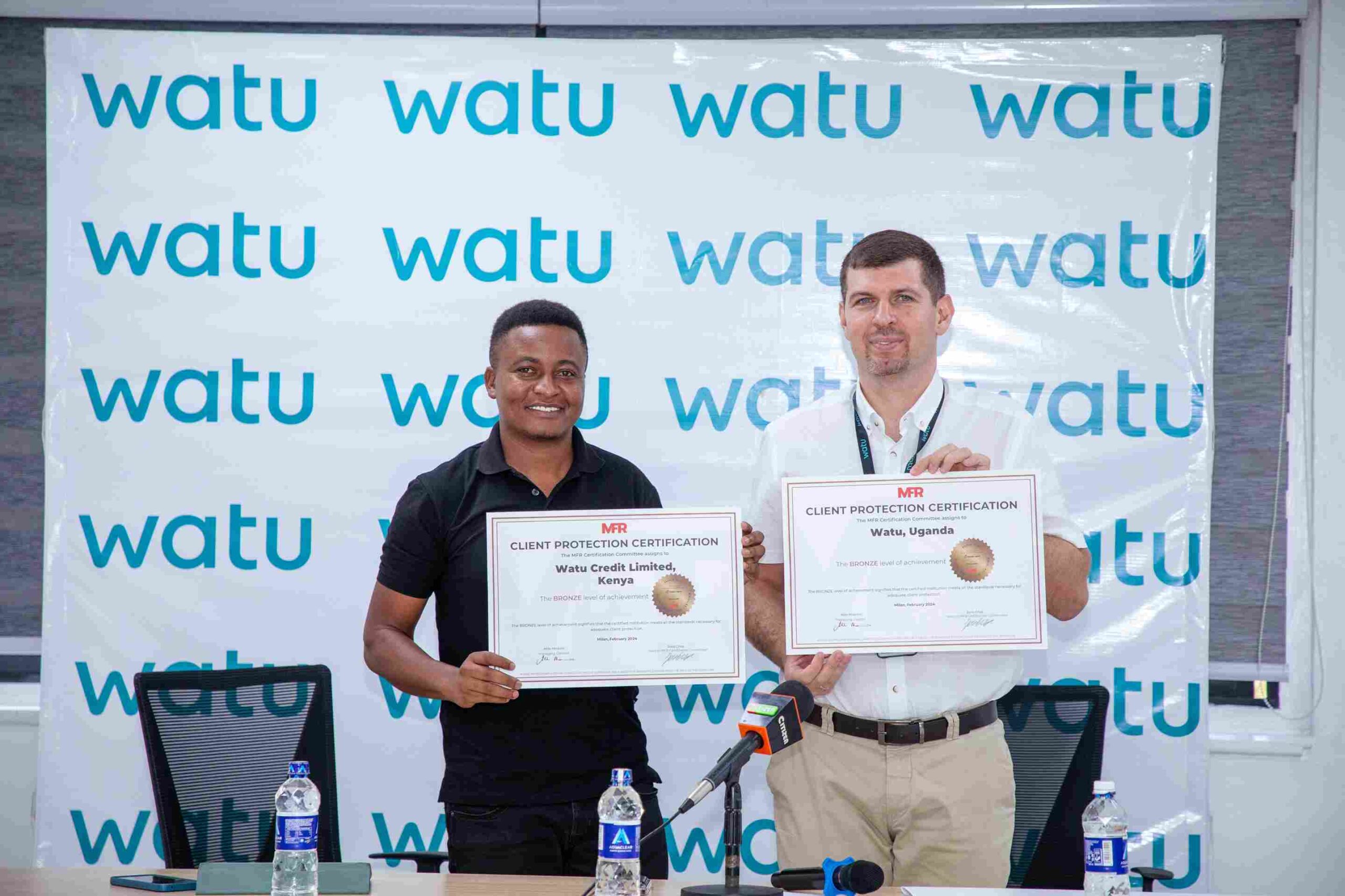
Watu’s governance framework has matured significantly. The company secured Bronze-level Client Protection Certification from MicroFinanza Rating (MFR) in Kenya, Uganda, and Tanzania, becoming one of the first institutions in the region to adopt global standards for responsible lending.
The report also highlights the establishment of a Group ESG Committee, the rollout of a centralised ESG data platform, and the delivery of over 10 ESG reports to investors. Watu’s whistleblowing programme processed 285 reports in 2024, reinforcing its commitment to ethical conduct and stakeholder accountability.
“Our initiatives have also directly empowered our staff, who remain our number one champions,” Kaneps noted. “Since 2023, we have tripled the average training hours per employee, strengthening talent development across the organisation.”
Economic Contribution and Future Outlook
In 2024, the company reported gross revenue exceeding USD 230 million, disbursed USD 31 million in wages, and contributed over USD 8 million in taxes across host governments. Its active loan portfolio surpassed 4 million, impacting more than 8 million lives.
Looking ahead, Watu aims to finance 5,000 electric vehicles and 2.6 million smartphones by the end of 2025. It also plans to implement a Resource Efficiency and Waste Management Plan targeting a 5% reduction in energy, water, and paper use, alongside expanded recycling programmes.
“Our vision to be the most impactful and innovative asset finance company in emerging markets isn’t just about financial returns,” Kaneps concluded. “It’s about creating a future where economic opportunity is accessible to all, where environmental responsibility drives innovation, and where entrepreneurs have the tools they need to thrive.”
