



Africa’s industrial and logistics market is experiencing unprecedented momentum, with modern warehouse occupancy levels reaching 83% in H1 2025, up from 75% a year earlier.
This 10.7% year-on-year surge reflects a maturing asset class increasingly favoured by investors, driven by e-commerce expansion, agro-industrialisation, and regional self-sufficiency, according to the Africa Industrial Market Dashboard – H1 2025.
“This surge reflects the growing maturity of Africa’s industrial real estate as a core investment asset class, while underscoring the persistent supply-demand imbalance for Grade A facilities, particularly across urban hubs and trade corridors,” said Boniface Abudho, Research Analyst at Knight Frank Africa.
E-Commerce and Agro-Industrialisation Fuel Demand
Africa’s online retail market is projected to exceed US$75 billion by 2025, intensifying pressure on logistics infrastructure, last-mile delivery networks, and climate-controlled storage.
- Nigeria: E-commerce market valued at US$8.53 billion in 2025, with a CAGR of 11.8% through 2033.
- South Africa: Domestic e-commerce is expected to more than double from US$35.23 billion in 2024 to US$74.79 billion by 2033.
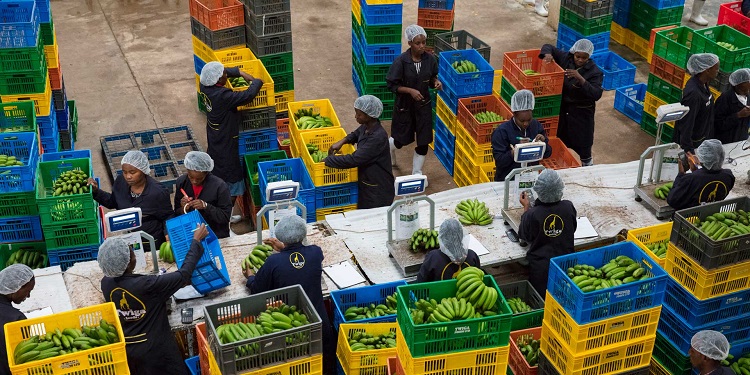
Agriculture remains a cornerstone of Africa’s economy, contributing 32% of GDP and employing over 65% of the population. Agro-processing is gaining traction, with the African Development Bank estimating that improved value addition could increase raw value capture by up to 600% in sectors like cotton-to-textile.
In Nigeria, the US$538 million SAPZ programme is set to boost agricultural productivity by over 60%, driving demand for cold storage and agro-logistics infrastructure.
Sustainability and Trade Integration Take Centre Stage
Environmental, Social, and Governance (ESG) compliance is reshaping industrial development across the continent.
- Kenya: Cold Solutions’ Tatu City facility became Africa’s first to achieve LEED Gold certification.
- South Africa: Woolworths invested nearly US$1 million in clean energy for distribution centres.
- Botswana: Launch of locally assembled electric vehicles signals a pivot to clean-tech industrialisation.
“Sustainability is now a defining feature of new industrial developments,” said Mark Dunford, CEO of Knight Frank Kenya. “Occupiers are increasingly prioritising ESG-compliant spaces that deliver operational efficiencies and lower energy consumption.”
Intra-African trade remains low at 14.4% of exports, compared to 60% in Europe (UNCTAD). However, infrastructure upgrades and AfCFTA-driven policy reforms are expected to narrow this gap.
Nigeria’s Dangote Petroleum Refinery, with a 650,000-barrel/day capacity and a new 1.6-million-barrel storage facility in Namibia, is reshaping regional energy flows.
Regional Performance Snapshot
| Country | City | Prime Rent (US$/sqm/month) | Average Yield (%) |
|---|---|---|---|
| South Africa | Johannesburg | 5.50 | 8.25 |
| Kenya | Nairobi | 6.00 | 9.50 |
| Egypt | 6th of October | 8.00 | 10.00 |
| Nigeria | Lagos | 5.00 | 8.00 |
| Zambia | Lusaka | 4.50 | 12.00 |
| Uganda | Kampala | 7.00 | 13.00 |
| Botswana | Gaborone | 4.50 | 8.50 |
| Malawi | Lilongwe | 3.00 | 12.00 |
| Tanzania | Dar es Salaam | 5.00 | 10.00 |
| Zimbabwe | Harare | 2.00–5.00 | 7.00 |
Kenya Infrastructure Investment Spurs Growth Despite Budget Cuts
