



Nairobi-based Poa Internet has secured US$4 million (KSh 517 million) in debt financing from Finnfund, a Finnish development financier, to accelerate the rollout of affordable broadband services across Kenya.
The investment will support Poa’s mission to close the digital divide by expanding high-speed internet access to underserved communities.
Backed by Nokia Fibre, Poa Targets Underserved Estates
The funding will enable Poa Internet to scale its infrastructure, with Nokia serving as the preferred fibre technology partner. The ISP currently holds 13% of Kenya’s ISP market share, having added 23,461 new subscribers in the June quarter alone.
“With Finnfund’s financing and Nokia’s fiber infrastructure, we will be able to extend Poa’s highly affordable internet service to even more Kenyan communities and increase their digital inclusion,” said Andy Halsall, CEO of Poa Internet.
Halsall emphasised that broadband connectivity is no longer a luxury but a necessity for sectors such as education, healthcare, trade, and government services.
Finnfund: Digital Infrastructure Is a Strategic Priority
Kelvin Kiiru, Investment Associate at Finnfund, underscored the importance of the partnership in advancing inclusive connectivity.
“We are excited to support Poa Internet in expanding its provision of high-speed internet to lower-income areas in Kenya,” Kiiru said. “Improving digital connectivity through affordable broadband supports economic growth and enables access to remote work, financial services, education, and healthcare.”
The investment is backed by the European Union and the European Fund for Sustainable Development Plus, reinforcing Finnfund’s commitment to digital inclusion across Africa.
EU Scales Up Broadband Investment Across Kenya
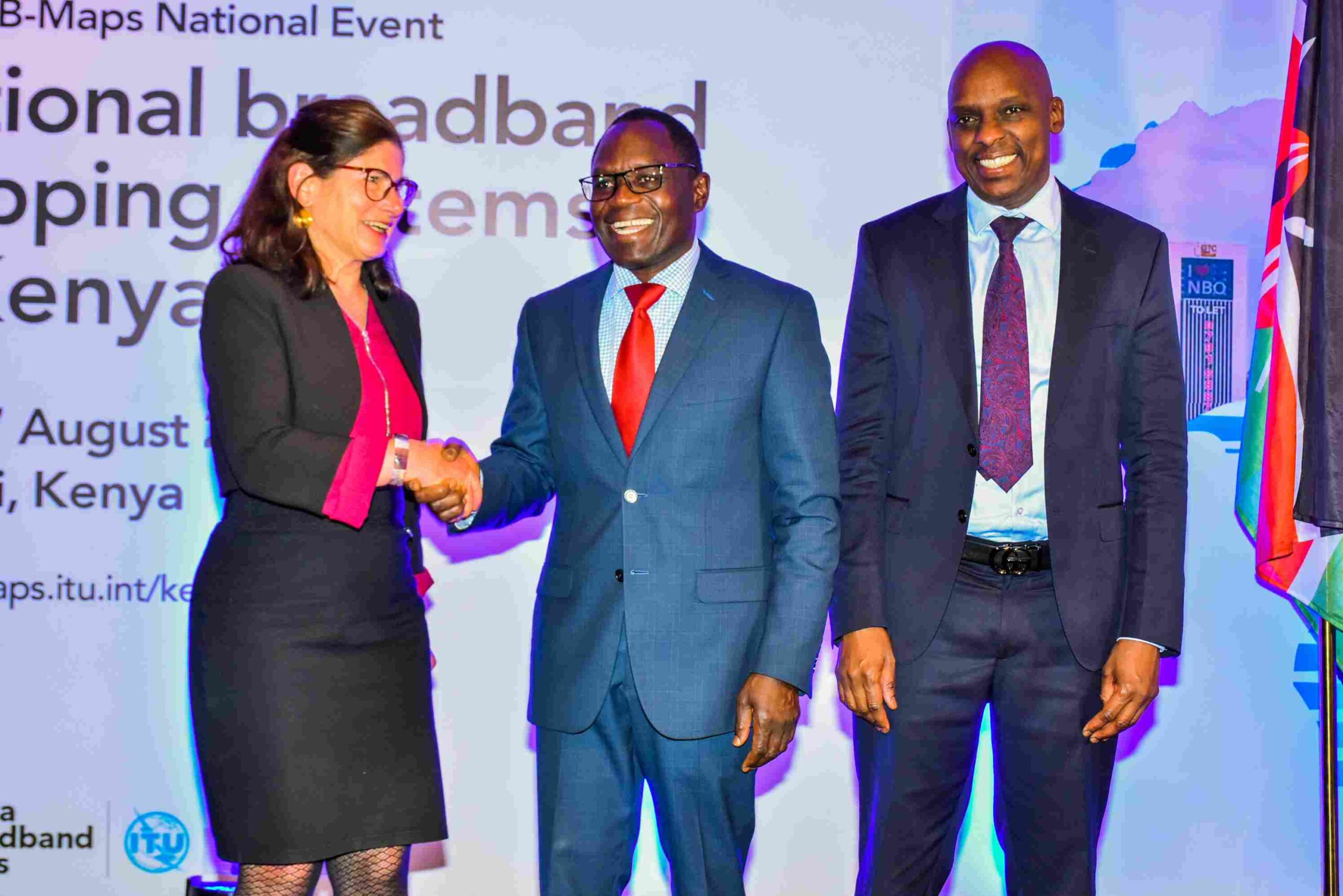
Kenya will also benefit from a broader $16.5 million (€15 million) commitment by the European Union to the Africa Broadband Mapping Systems (Africa-BB-Maps) project. The initiative, launched in Nairobi, aims to strengthen national broadband mapping systems across 11 Sub-Saharan countries, including Kenya.
“The EU private sector is mobilising $330 million in this initiative. In Kenya, the EU is connecting 1,000 primary schools with broadband,” said Henriette Geiger, EU Ambassador to Kenya. “The $16.5 million to be invested in Africa Broadband Mapping Systems will benefit 11 countries, including Kenya.”
The Africa-BB-Maps project (2025–2028) is implemented by the United Nations International Telecommunication Union (ITU) and funded by the EU. It will enable national regulatory authorities to map infrastructure and service coverage, identify connectivity gaps, and guide data-driven investment decisions.
Kenya will also benefit from the EU’s plan to expand the subsea blue cable project, linking Djibouti, Somalia, Kenya, and Tanzania, further strengthening regional connectivity.
Kenya’s Broadband Gaps Highlight Urgency
At the launch event, David Mugonyi, Director General of the Communications Authority, emphasised the urgency of expanding broadband access.
“There is a need to eliminate this digital divide and facilitate the 164 sublocations which lack 3G and 4G Internet to get connected,” Mugonyi said.
He noted that only 47.5% of Kenyan households currently have internet access, with rural penetration dropping to 26%, underscoring the importance of targeted infrastructure investment.
