



Kenya’s ambitious healthcare reform, spearheaded by the newly established Social Health Authority Kenya (SHA), was meant to usher in a new era of universal healthcare.
As the official NHIF replacement, SHA committed to transparency, efficiency, and equitable access to medical services. However, less than a year into its rollout, the system is under intense scrutiny following revelations of widespread fraud, rejected claims, and confusion surrounding the SHA bank payment system.
SHA Under Scrutiny: Fraudulent Claims & Billing Scandals
Launched in October 2024, SHA was designed to streamline healthcare access and eliminate the inefficiencies that plagued NHIF. Yet recent audits have uncovered alarming irregularities. Over KSh10.6 billion in claims have been rejected, many tied to SHA hospital billing fraud, non-compliant facilities, and suspicious transactions.
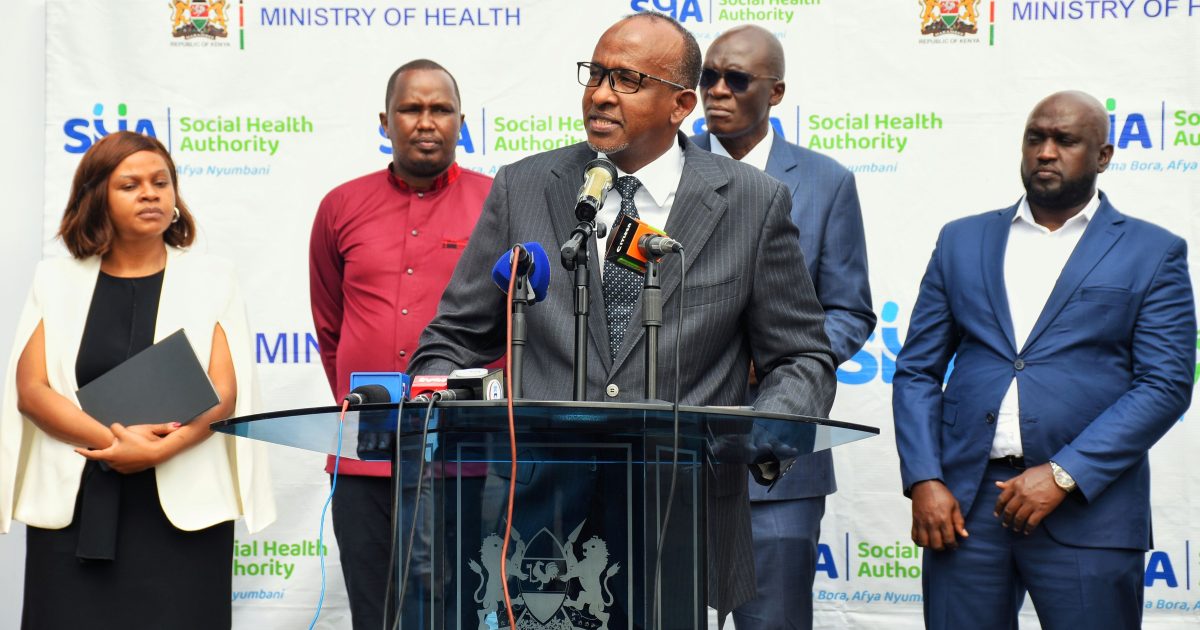
Health Cabinet Secretary Aden Duale confirmed the scale of the issue:
“Claims worth KSh10.6 billion have been rejected due to fraudulent activities or non-compliance. This action is taken under the authority of Section 48 (5) of the Social Health Insurance Act, 2023.”
The SHA fraud scandal has sparked public outrage and raised questions about the system’s internal controls. Hospitals implicated in the scandal allegedly submitted inflated bills, billed for services not rendered, or colluded with rogue agents to siphon funds.
Hospitals Flagged in SHA Fraud Crackdown
In a sweeping move, the Ministry of Health suspended 45 health facilities across 18 counties, citing falsified records, phantom billing, and upcoding. These facilities will not receive SHA benefits during the suspension period.
Some of the flagged hospitals include:
- Nyanchwa Adventist Mission Hospital – Kisii
- Lenmek Hospital – Kisii
- Northgate Hospital – Garissa
- Palmcare Sinai Hospital – Uasin Gishu
- Equity Afia (Homa Bay & Mandera branches)
- Vebeneza Medical Centre – Nairobi
- Jambo Jipya Hospital – Mtwapa
- Kotiende Medical Centre – Homa Bay
- Nabuala Hospital – Bungoma
- Rachuonyo County Hospital – Homa Bay
- Salama Yard Medical Center – Nairobi
- Zion Ahadi Mediclinic – Kakamega
- St. Mark Orthodox Hospital Chavakali – Vihiga
- Tanaja Hospital Limited – Busia
- Maxicare Sunrise Ltd Hospital – Bungoma
- Queen Rivers Medical Centre – Homa Bay
- Lifecare Hospitals Bungoma Ltd – Bungoma
- ABM Specialized Hospital – Nairobi
- Al-Masry Nursing Home Limited – Mandera
- White Rose Medical Centre – Kirinyaga
- Imara Healthcare Centre – Nairobi
- Dolma Medical Center – Nairobi
- Lengo Medical – Nairobi
- Archprime Medical Clinic Oyugis – Homa Bay
- Lemayian Hospital-Kitengela – Kajiado
- Walalaha Nursing Home – Wajir
- Torics Nursing Home – Homa Bay
- Nissi Medical Centre – Kisumu
- Dawa Front Healthcare Services – Kisumu
- New Manyalo Nursing Home – Wajir
The crackdown also led to the closure of 728 non-compliant facilities and the downgrading of 301 others by the Kenya Medical Practitioners and Dentists Council (KMPDC).
SHA Bank Payment System: Clarifying the Role of Financial Institutions
To facilitate contributions, SHA partnered with six banks: KCB, Equity, Co-operative Bank, ABSA, DTB, and Sidian Bank. These institutions were licensed by the Central Bank of Kenya (CBK) to ensure secure and traceable payments. However, misinformation has led many Kenyans to believe that these banks manage or disburse SHA funds.
Sidian Bank issued a public clarification:
“We only facilitate collections, remitting directly to SHA accounts. We do not hold or manage SHA funds.”
This distinction is critical. The banks act as collection agents, not custodians of public health funds. Their role is limited to processing payments and ensuring compliance with SHA’s financial protocols.
How to Pay SHA Contributions: A Guide for Kenyans
Understanding how to contribute to Kenya SHA health insurance is essential for both formal and informal sector workers. Here’s a breakdown:
- Formal Sector: Contributions are deducted directly from salaries via employer-linked bank accounts.
- Informal Sector: Individuals must generate an eSlip on the SHA portal and pay via M-PESA Paybill 200222.
- SHA Contribution Rates: Set at 2.75% of income, ensuring proportional contributions across income brackets.
Despite these clear guidelines, many Kenyans report confusion and delays, especially in rural areas where digital literacy and access to banking services remain limited.
Transparency Challenges: The KMHFR Controversy
In a move that sparked further controversy, the Kenya Master Health Facility Registry (KMHFR) was temporarily disabled. This registry is a vital public resource that lists all licensed health facilities in Kenya. Its sudden unavailability raised concerns about transparency and accountability.
Dr. Brian Lishenga, Chair of the Rural Private Hospitals Association (RUPHA), criticised the move:
“It is a public site, and by pulling it down, the ministry is going against the right to access information.”
The Kenya health ministry denied any deliberate blackout, citing technical upgrades. However, stakeholders argue that such disruptions erode public trust and hinder oversight.
Government Response: Fraud Detection & Public Reassurance
Despite the scandal, government officials maintain that SHA is a significant improvement over NHIF. Deputy President Kithure Kindiki commended the system’s ability to detect fraud early:
“SHA, unlike the defunct NHIF, is effectively detecting fraud.”
Medical Services Principal Secretary Ouma Oluga echoed this sentiment:
“SHA is working. We are on the ground daily, ensuring no Kenyan is denied healthcare due to financial hardship.”
These statements aim to reassure the public, but critics argue that more than words are needed. They call for independent audits, stronger oversight, and real-time public access to SHA performance data.
Restoring Trust in Kenya’s Healthcare Reform
The SHA fraud detection mechanisms may be functioning, but the scale of rejected claims and public confusion suggests deeper systemic issues. For Kenya’s healthcare reform to succeed, SHA must prioritize transparency, accountability, and citizen engagement.
Banks involved in the SHA bank payment system must continue to clarify their roles, and the Kenya health ministry must ensure that digital platforms like KMHFR remain accessible. Most importantly, SHA must rebuild public trust by demonstrating that it can deliver on its promise of affordable, universal healthcare without falling prey to the same pitfalls that doomed NHIF.
The road ahead is challenging, but with robust governance and civic oversight, SHA can still become the cornerstone of a healthier, more equitable Kenya.
How government policies are quietly reshaping fertility rates in Kenya & around the world
