



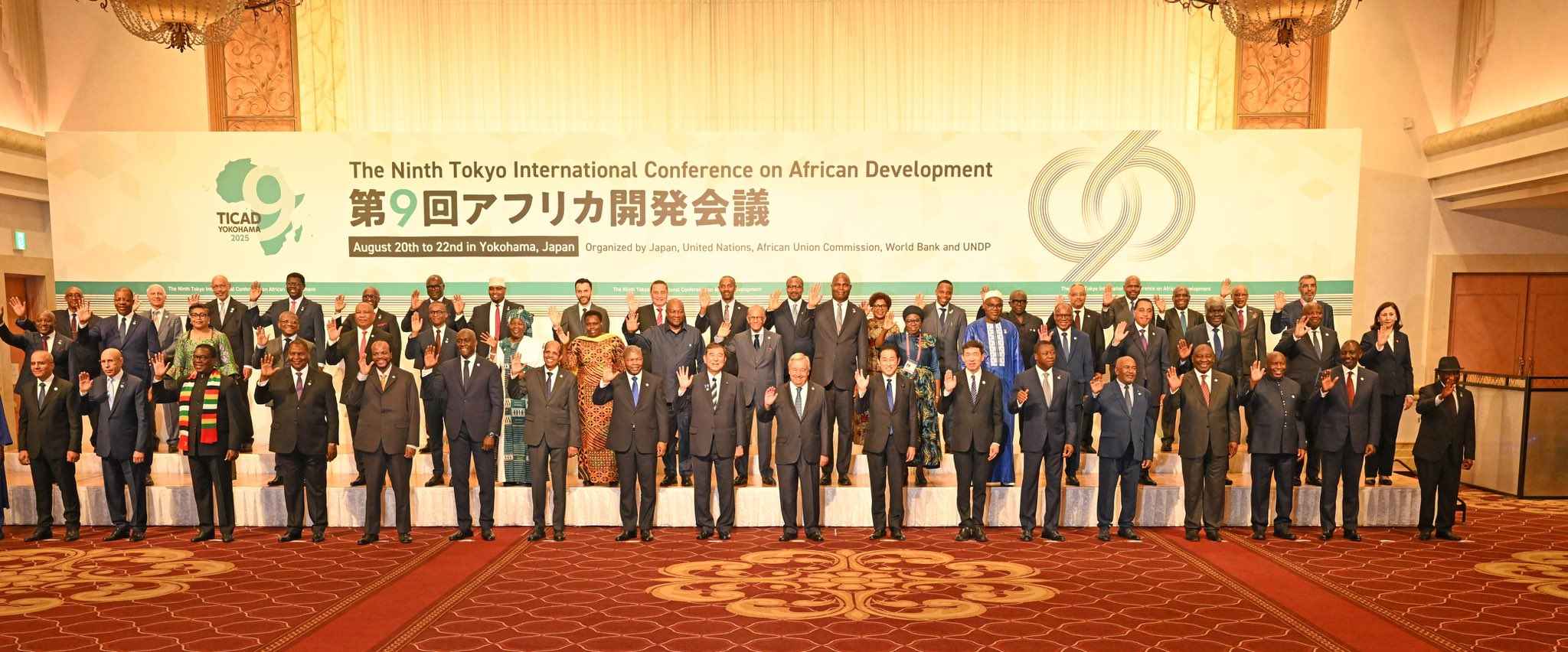
The ninth Tokyo International Conference on African Development (TICAD 9) concluded with commitments to accelerate Africa’s transformation under the African Union’s Agenda 2063, positioning Japan as a key development partner amid waning Western aid.
Held in Tokyo, the high-level summit convened African heads of state, Japanese officials, development partners, and private sector leaders. The resulting declaration emphasised economic resilience, digital transformation, peacebuilding, and sustainable development.
“This initiative seeks to promote Africa’s regional integration and industrial development in the Indian Ocean-Africa Economic Region… as a key driver of global economic growth,” said Japanese Prime Minister Shigeru Ishiba, unveiling a new economic corridor linking Africa to the Indian Ocean under Japan’s Free and Open Indo-Pacific (FOIP) strategy.
Strategic Financing and Infrastructure Commitments
Japan pledged $5.5 billion in loans to African nations, countering recent aid cuts by the US and UK. The funding package includes:
- A $169 million yen-denominated loan to Kenya, backed by Nippon Export and Investment Insurance (NEXI), targeting the automotive and energy sectors.
- A grant for upgrades to Kenya’s Port of Mombasa, where cargo volumes rose 8% in H1 2025.
“This credit line is expected to support Kenya’s industrial development and local job creation… and contribute to the sales of Japanese vehicles, which hold a strong market share in the Kenyan market,” NEXI stated.
Japan also committed to investing in special economic zones focused on electronics, green technologies, and automotive manufacturing, reinforcing Africa’s industrial base and export potential.
Africa’s Credit Sovereignty and Trade Integration
TICAD 9 endorsed the launch of the African Credit Rating Agency (AfCRA), set to begin operations next month. Delegates emphasised its role in reforming global credit practices that inflate African borrowing costs and hinder development.
“AfCRA represents a critical step toward fairer global credit assessments and financial autonomy for African nations,” said one delegate.
The summit reaffirmed the African Continental Free Trade Area (AfCFTA) as central to Africa’s economic integration. Japan pledged to expand market access for African goods and support intra-African value chains.
Digital Transformation and Smart Infrastructure
Recognising Africa’s youthful, tech-savvy population, TICAD 9 placed digital transformation at the heart of its development agenda:
- Commitments to establish AI innovation hubs and centers of excellence for ethical, inclusive governance.
- Collaboration in robotics, smart city infrastructure, and human-centred AI.
Infrastructure pledges included joint investment in rail, aviation, ports, and the Trans-African Highway, with emphasis on smart mobility under the Single African Air Transport Market (SAATM).
Food Security, Climate Finance, and Energy Access
Leaders reaffirmed alignment with the Kampala Declaration under CAADP, pledging to scale up climate-smart agriculture, modern irrigation, and agro-industrial value chains. Japan committed support for World Bank food security programs, with a focus on empowering women and youth.
On climate, both sides called for accessible climate finance and committed to renewable energy infrastructure and local mineral processing under just energy transition frameworks.
“Africa must benefit fully from its vast renewable and mineral resources,” said a joint communiqué.
The summit backed the Mission 300 initiative by the World Bank and African Development Bank, aiming to deliver electricity to 300 million Africans by 2030.
What It Means for Africa
TICAD 9 signals a strategic pivot in global development partnerships, with Japan deepening its engagement across Africa’s industrial, digital, and financial ecosystems. The summit’s outcomes reflect a growing recognition of Africa’s central role in global growth and the need for equitable financing, inclusive innovation, and regional integration.
