


A scheduled session by Kenya’s Public Investments Committee on Commercial Affairs and Energy to assess the financial health of the National Oil Corporation of Kenya (NOCK) was postponed on Wednesday following an intense debate over the future of the state-owned entity.
Chaired by Pokot South MP David Pkosing, the committee was set to review NOCK’s audited accounts spanning FY 2018/19 to 2022/23. However, MPs called for scrutiny after describing NOCK as a “dead” agency plagued by financial opacity and operational dysfunction.
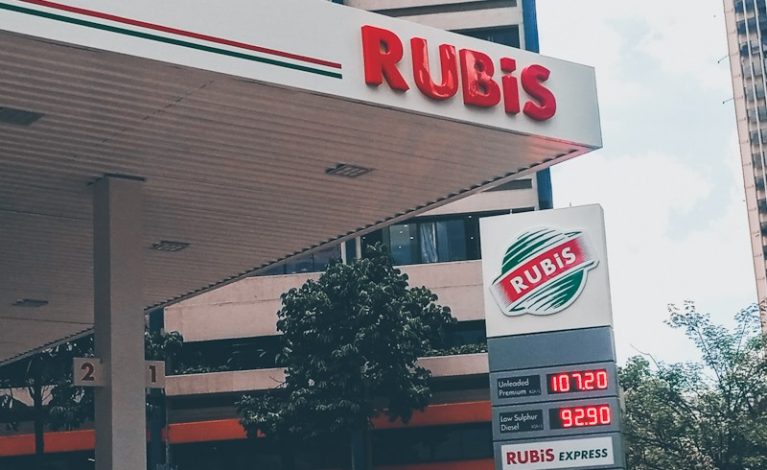
The session was triggered in part by the government’s recent partnership with RUBiS Energy Kenya, which includes transferring management of over 99 NOCK fuel stations. Under the agreement, RUBiS will oversee NOCK Downstream Limited—the subsidiary responsible for fuel marketing and distribution—through a profit-sharing deal aimed at reviving the corporation’s operations.
NOCK CEO Leparan Gideon Ole Morintat, appearing before the Committee, acknowledged the firm’s financial distress, revealing an outstanding debt of KSh 8.3 billion and a negative balance sheet. He said the RUBiS arrangement, which involves KSh 3 billion in working capital and another KSh 3 billion for refurbishments, was designed to “settle debts and get back to its knees.”
National Oil Corporation owes KCB Kenya Kes 3.4 billion & Stanbic Bank Kenya Kes 2.9 billion. https://t.co/U09BsfCL89 pic.twitter.com/9OLG8fEkuC
— Julians Amboko (@AmbokoJH) July 31, 2025
Yet MPs remained unconvinced. Hon. Babu Owino (Embakasi East) pressed for transparency:
“There is crucial information we need to understand what exactly is ailing NOCK and whether it can be salvaged.”
The Cabinet-approved restructuring plan seeks to convert NOCK into a holding company with three specialised subsidiaries:
| Subsidiary | Focus Area |
|---|---|
| NOC Upstream Limited | Exploration and upstream production |
| NOC Trading Limited | Strategic petroleum stockholding for import/export |
| NOC Downstream Limited | Marketing and distribution of petroleum products |
According to media reports, RUBiS Energy Kenya will earn 30% of profits from fuel sales in exchange for its investment and operational management—a deal formalised under the Specially Permitted Procurement Procedure (SPPP) per the Public Procurement and Asset Disposal Act, 2015.
Cabinet Secretary for Energy and Petroleum Opiyo Wandayi defended the move:
“This collaboration marks a transformative step… strengthening the National Oil Corporation, enhancing its capacity, and creating long-term value for citizens.”
Morintat added:
“Securing a shareholder capital injection wasn’t feasible. So, NOCK sought a non-equity strategic partner to revitalize the company.”
But scepticism within Parliament runs deep. Hon. Adan Keynan (Eldas) questioned the nature of the deal:
“Borrowing KSh 3 billion from a private entity like RUBiS is criminal. Whoever is pushing this deal is a saboteur.”
He drew comparisons to Telkom Kenya’s murky ownership saga:
“We still don’t know who owns it.”
Chairperson Pkosing raised concerns over the National Treasury’s silence:
“Why can’t Treasury step in with the KSh 3 billion? Are there hidden interests?”
MPs immediately ordered a special audit by the Auditor General into NOCK’s contracts and operations, with emphasis on the RUBiS agreement, to be completed within two weeks. All NOCK transactions, especially those related to RUBiS, were frozen pending further investigation.
Hon. Babu Owino offered a stark metaphor:
“NOCK was abducted and killed. All that remains is to plant flowers at its grave.”
The Committee is set to reconvene Thursday to chart next steps, emphasising the need to safeguard taxpayer funds and prevent what some lawmakers see as a disguised sell-off.
“Parliament must interrogate Executive decisions and ensure value for taxpayers’ money,” said Keynan.
